Sunday, June 24, 2007

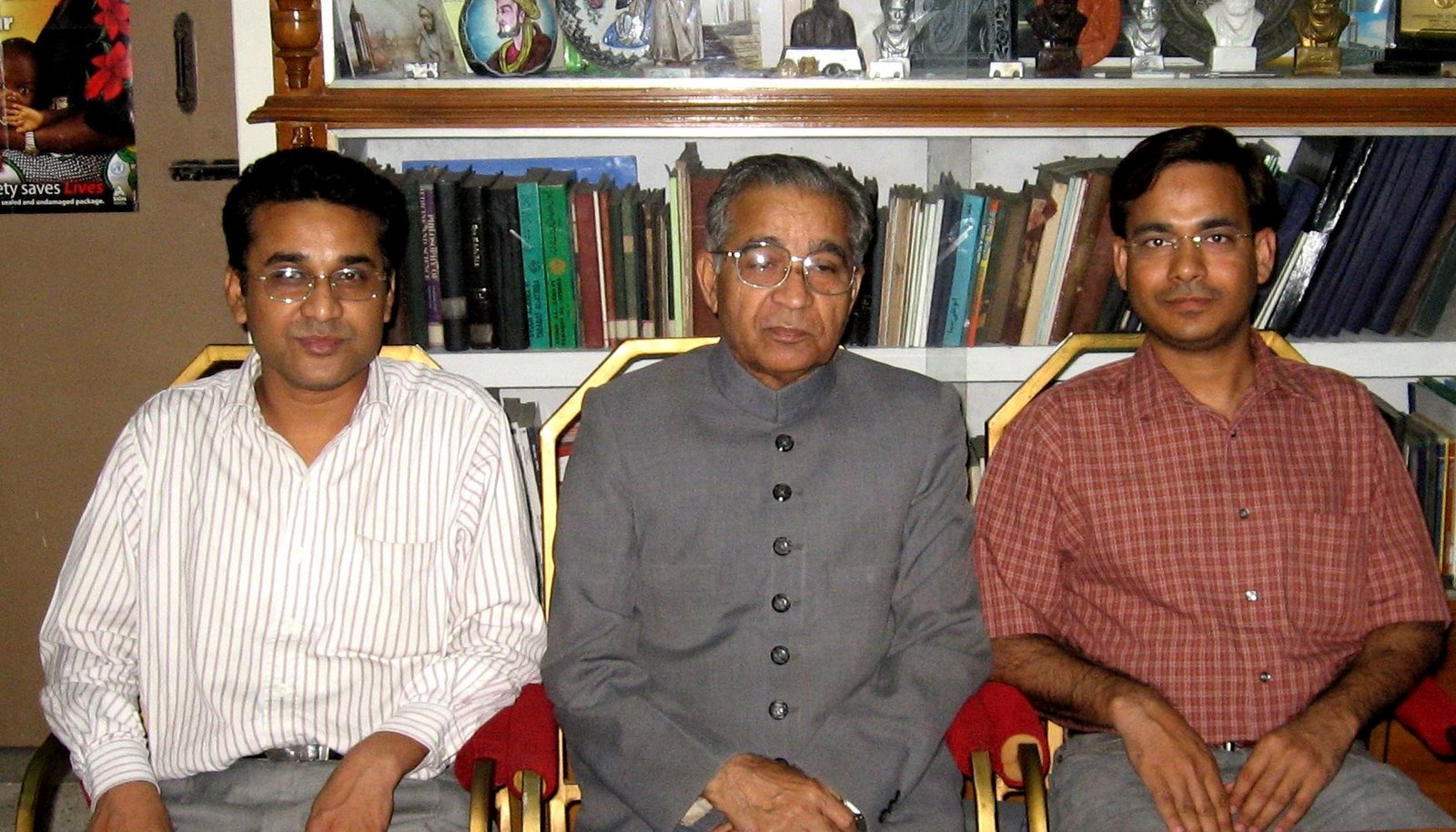
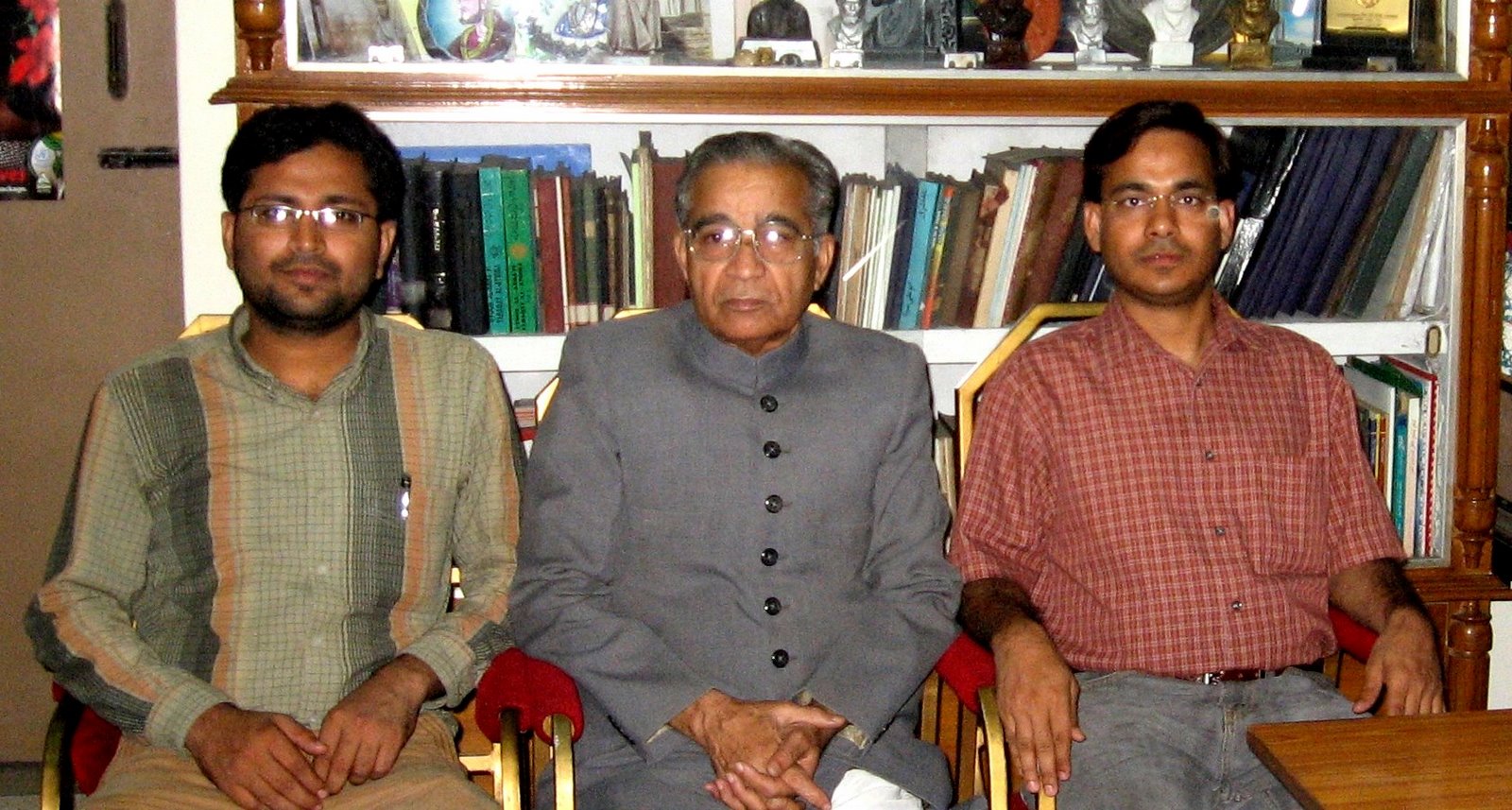
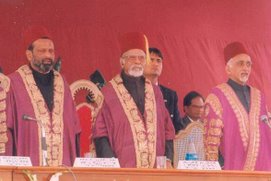
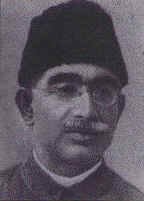
Prof. Mukhtaruddin Ahmad `Arzoo


Prof. Mukhtaruddin Ahmad `Arzoo

Born: 14th November 1924 in Patna Bihar
Fathers Name: Maulana Zafaruddin Qadri Rizvi
(Resident of Azimabad (Patna) and a disciple of Maulana Ahmad

Raza Khan Bareilvi)

D.Phil. Oxford University : 1958

(Under the able guidance of Prof. Hamilton A.R. Gibb)
Ph.D. 1953 AMU-Aligarh

(Under the able guidance of Maulana Abdul Aziz Meman)
M.A. (Arabic)-1949 AMU Aligarh

Lecturer, Department of Arabic AMU Aligarh: 1953
Reader:Islamic studies and Deputy Director of Institute of Islamic Studies: 1958
Professor and Chairman in Department of Arabic: 1968
Dean, Faculty of Arts: 1975


Editor: Journal of Islamic Studies, MAJALLAT AL-MAJMA AL-ILMI AL-HINDI

Ghalib Number of Aligarh Magazine

Member Editorial Board: Ma’arif: Monthly Journal of Darul Musannefin Shibli Academy


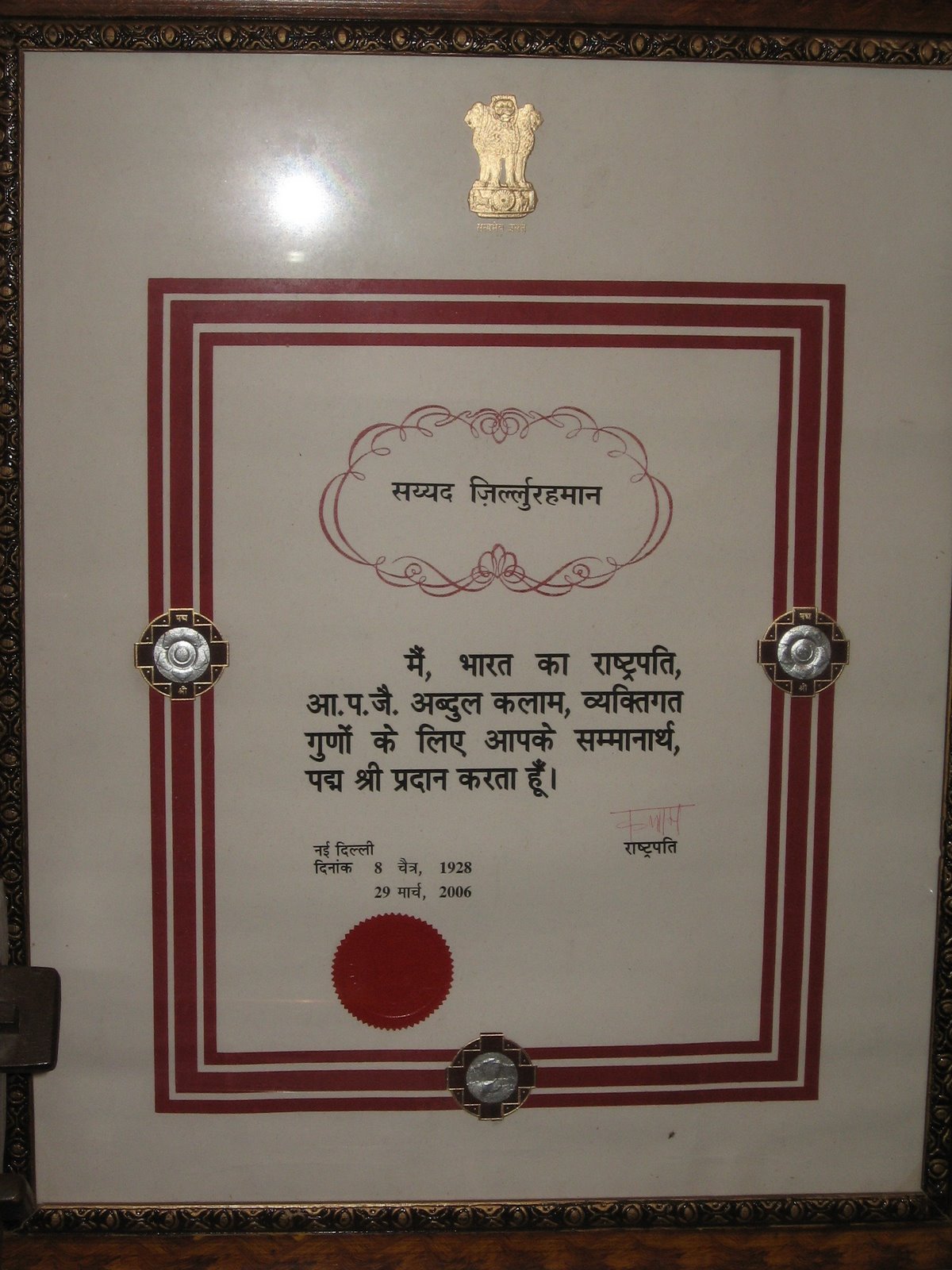
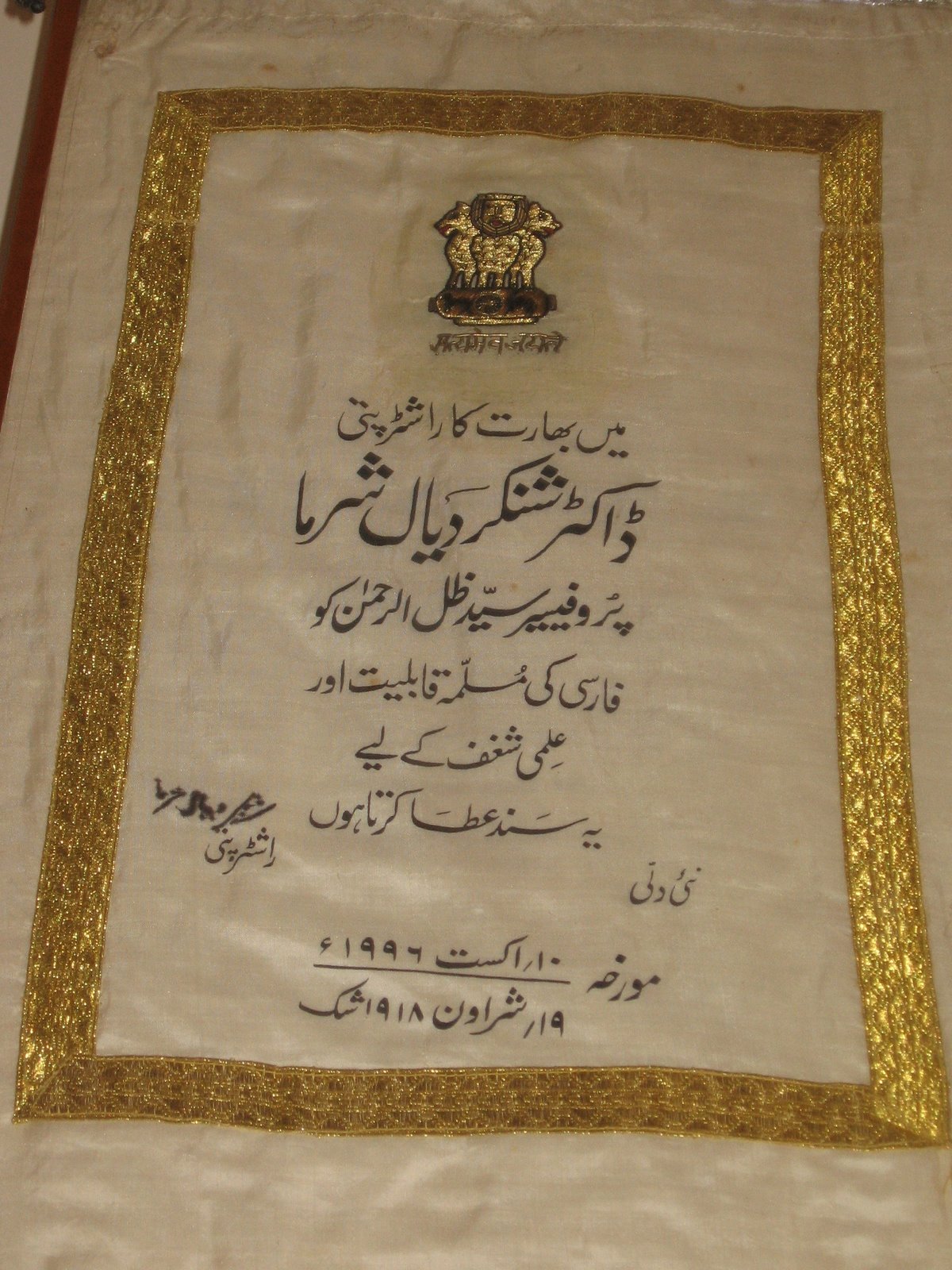
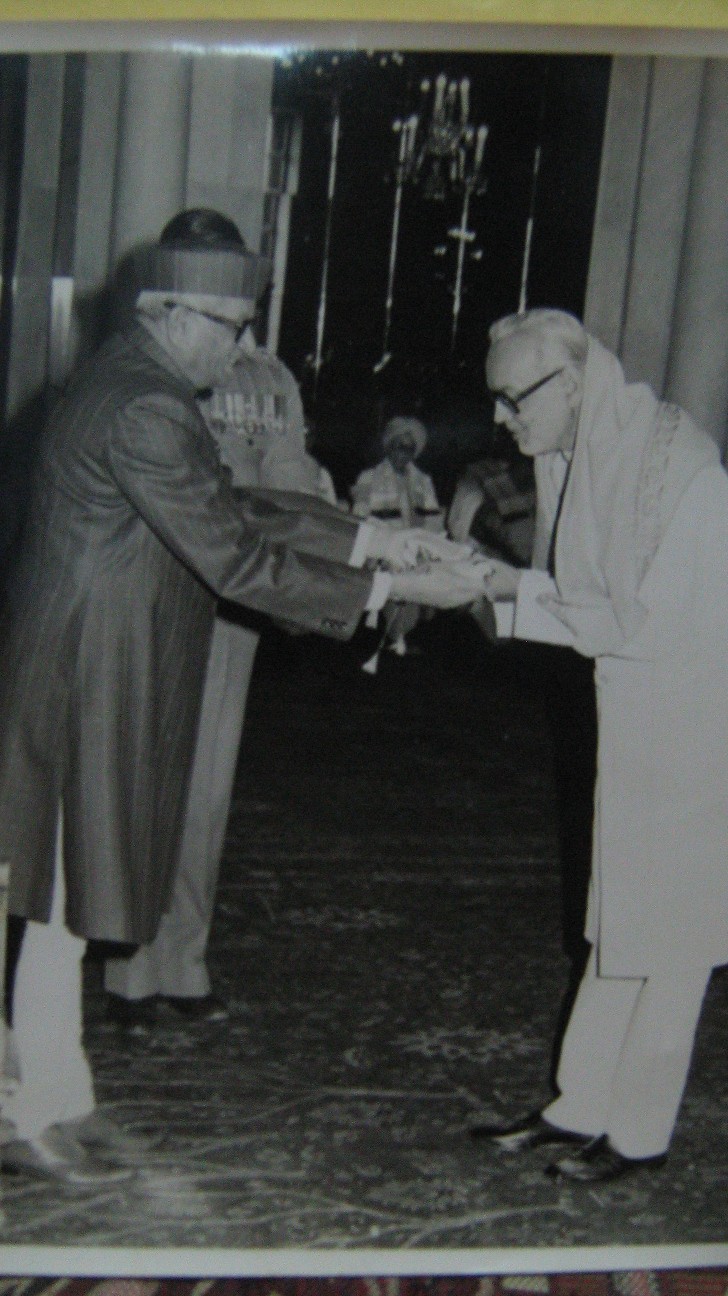
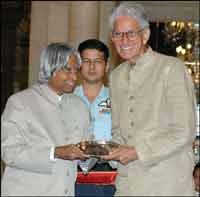
Awards : Certificate of Honor from President of India


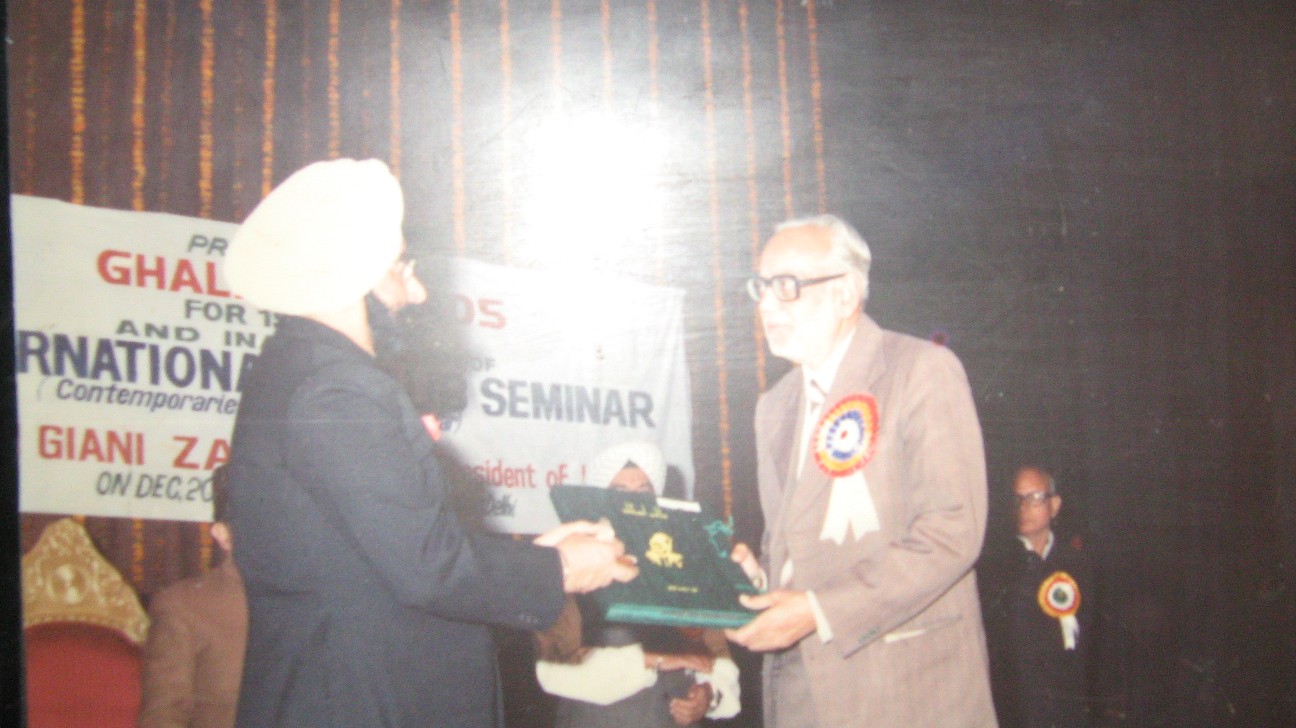
Ghalib Award: 1983

Sir Syed Life Time Achievement Award:

Aligarh Alumni Association of New York US: 2007


Founder Vice-Chancellor of Maulana Mazharul Haq Arabic & Farsi University, Patna: 1988


Books: Karbal Katha, Khutoot-e-Akbar, Saire-Dehli, Tazkarah Azurdah, Tazkarah Gulshan-e- Hind, Tazkarah Shoara-e-Farrukhabad, Diwaan-e-Huzoor, Ahwaal-e-Ghalib and Naqad-e-Ghalib. Edited: Zakir Sahib Ke Khat, Vol. III.


Prof. Mukhtaruddin Ahmad `Arzoo were born in a religious family of Maulana Zafaruddn Qadri Rizvi of Patna (also known as Azimabad in the past). He completed his primary education from Jamia Islamia Shamsul-Huda, Patna. He successfully completed the course of Maulvi and Alimiat from Madarsah examination board and secured distinction in Fazilat examination. He completed his matriculation from University of Patna in 1943 and joined Aligarh Muslim University for higher education. He completed M.A. in Arabic in 1949 and joined Ph.D. under the guidance of Maulana Abdul Aziz Memon, a word renowned Arabic scholar, Professor and Chairman Department of Arabic, AMU Aligarh and disciple of Deputy Nazir Ahmad. He became renowned after Editing the famous Ghalib Number of Aligarh Magazine.
After completing his Ph.D. he joined Department of Arabic as Lecturer in 1953. In the same year he received Rock Fuller Fellowship for research in Middle-East and England. He traveled to Germany, France, Egypt, Turkey, Syria, Lebanon and Iraq for educational purposes. He also stayed in Holland for couple of months and worked in Leiden University Library. He wrote the thesis under the guidance of Prof. Hamilton A.R. Gibb in Oxford University to receive his D.Phil.

In 1958, he became Reader in Islamic studies and Deputy Director of Institute of Islamic Studies at AMU Aligarh. He started journal of Islamic Studies and was its Editor for 12 years. In 1968 he became Professor and Chairman in Department of Arabic. He became Dean, faculty of Arts in 1975. He was Editor for MAJALLAT AL-MAJMA AL-ILMI AL-HINDI for number of years. For his contributions to Arabic and Farsi research work, he received Ghalib Award in 1983. After retirement he is staying in Aligarh and busy in his research. Well known critic and Urdu write Intizar Hussain said: “And how can I forget those two distinguished scholars, Dr Mukhtaruddin Aarzoo and Prof Asloob Ahmad Ansari, who after retirement have chosen to lead a secluded life focusing on research and study”.


On 10th April, 1998, Prof. Mukhtaruddin Ahmad Arzoo was appointed as Founding Vice-Chancellor of Maulana Mazharul Haq Arabic & Persian University in Patna.
He lives with his family in Aligarh.

=================================
Professor Mukhtar Uddin Ahmad “Arzoo”
Professor Ather H. Siddiqi

Former Chairman, Department of Zoology & Dean Faculty of Life Sciences

Aligarh
Muslim University
, Aligarh

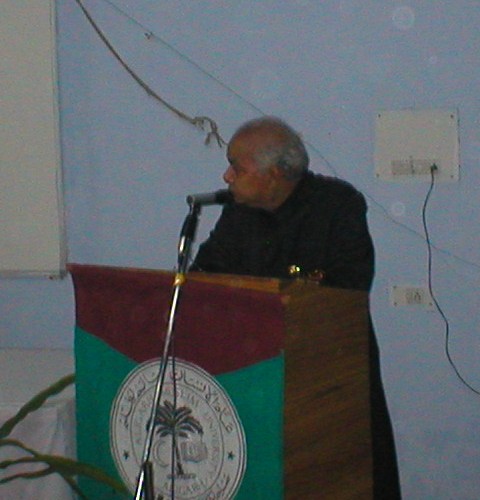
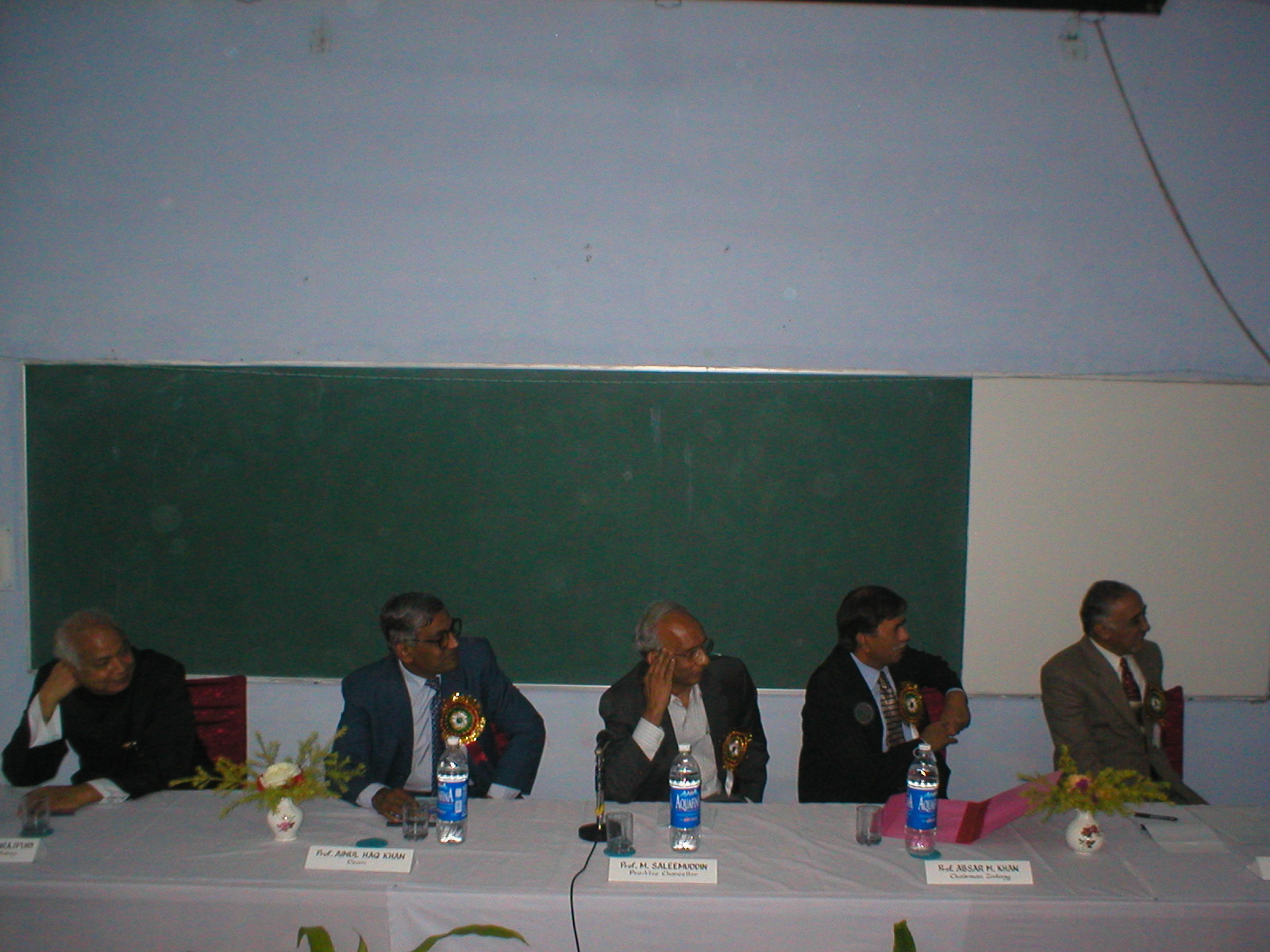
Six years ago, the Aligarh Alumni Association, New York Tristate, instituted the annual ‘Sir Syed Day Lifetime Achievement Award for Excellence in Literature, Poetry, Arts or the Sciences’, which has been presented in previous years to some of the most distinguished names in South Asia in various fields. This year, the association chose Prof. Mukhtar Uddin Ahmad, former Professor of Arabic and Dean Faculty of Arts and one of the most renowned, revered and senior academicians at Aligarh Muslim University, Aligarh for this honor. To spare Prof. Mukhtar Uddin the stress and inconvenience of traveling to the USA to receive the award in person, the association was able to organize an event for the presentation of this award on the AMU campus through the hard work and courtesy of Dr. Wajid Ali Naqvi. This article is adapted from a speech given on this occasion by the author.

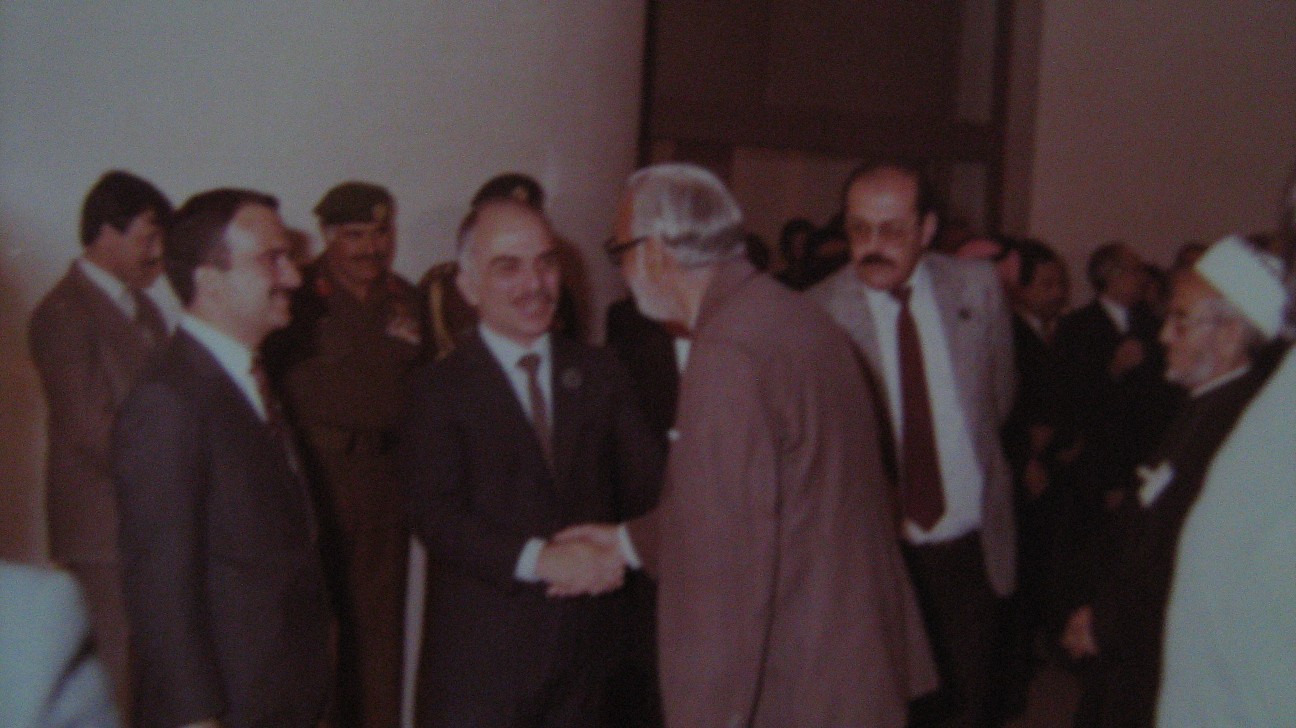
It is a matter of great pleasure and honor for the author to write about the extraordinary scholarly contributions of one of the most illustrious sons of Aligarh, Prof. Mukhtar Uddin Ahmad, whose name is known to every Aligarian for the last 60-65 years. Throughout its history, the Aligarh Muslim University has had the distinction of producing many scholars, intellectuals and academicians of high caliber but Prof. Mukhtar Uddin is one of the few in the league of giants who stands out from a galaxy of Aligarians as far as his educational, literary and intellectual contributions in the field of Arabic and Urdu are concerned. He is a member of many academies and has traveled far and wide in Middle Eastern as well as in European countries. He has been invited to many countries, like Egypt, Jordan, Syria and Pakistan and is a frequent visitor to Jordan for advising the government academy on research in Arabic Studies. In recognition of his outstanding contributions to Arabic and Urdu, he was awarded the President of India's Certificate of Honor in Arabic and the Ghalib Award by the Ghalib Institute in Delhi.

Professor Mukhtar Uddin Ahmad was born on 14th November 1924 in Patna, Bihar. His father, Maulana Zafaruddin Qadri Rizvi, a disciple of Maulana Ahmad Raza Khan of Bareilly, belonged to a distinguished family of scholars, had authored more than fifty books and was counted among the very learned people of Azimabad, as Patna was known in those days. Mukhtar Sahib is a seventh generation descendent of Sheikh Abdul Qadir Jeelani.

After having being tutored by his parents in Arabic, Persian and Urdu at home and finishing the Holy Quran at age six, he joined regular school and completed his primary education from Jamia Islamia Shamsul-Huda

Patna, successfully completing the course of Maulvi and Alimiat from Madarsah examination board. He stood first among all students in Bihar and Orissa in Fazil examination and was awarded the Sir Fakhruddin gold medal. He secured the same distinction two years later in the Fazil Hadith examination and was again awarded a gold medal, presented by Sir Abdul Aziz, State Minister of Education. During the six years that he spent at Jamia Shamsul Huda, he had an opportunity of interacting with and benefiting from the knowledge of a number of learned scholars of different schools of thoughts and traditions. Maulana Zafar Qadri, his father, thought highly of the profession of teaching in religious schools and naturally wanted his son to follow in his foot steps. He had firmly decided to send him to Jamia Azhar in Egypt and had initiated correspondence with Mustafa Muraghi, the Sheikh ul Azhar; however the outbreak of World War II derailed his plans for the further education of his son. Muktar Sahib, therefore, had to turn his attention toward English education, passed his matriculation examination from the University of Patna in 1942 and joined Aligarh Muslim University in 1943. After completing his B.A., he wanted to take admission in M.A. but was equally interested both in Urdu and Arabic and could not make up his mind about which subject to choose. As he has related in one of his articles, he kept a filled out application for admission to M.A Urdu program in one pocket and for Arabic in the other pocket of his Sherwani. In this state of indecision, he went to meet Maulana Abdul Memon of the Department of Arabic one day and described his dilemma to him. Maulana Memon asked him to show the two forms, tore up the application form for admission to post graduate program in Urdu and threw it in the waste paper basket. He then signed the application for admission to M.A in Arabic and returned it to Mukhtar Sahib and stated with a hearty laugh that a decision had been made. Mukhtar Sahib completed M.A. in Arabic in 1949 and stood first in order of merit.

Following his graduation, there were job opportunities for him with the Archaeology Department of the Government of India and at Calcutta University, however Dr. Zakir Husain, the new vice-chancellor of AMU who was well aware of Mukhtar Sahib's capabilities through his articles and the famous 'Ghalib Number' of the Aligarh Magazine, wanted him to stay at Aligarh and arranged a part-time job for him at Lytton library. He worked from morning to afternoon at the library and devoted the rest of his time to his research finishing his thesis work for a Ph.D. degree in Arabic, under the able guidance of Maulana Abdul Aziz Memon, a world-renowned Arabic scholar, Professor and Chairman Department of Arabic at AMU Aligarh and a disciple of Deputy Nazir Ahmad, in less than two years. Dr Cranko, the renowned German scholar, Chairman of

Arabic at Cambridge University, who was the assigned foreign examiner/expert for Mukhtar Sahib’s thesis was ill and hospitalized at the time. He initially refused to take up the responsibility of serving as the examiner. However, when he came to know of the topic of Mukhtar Sahib’s research, which was in a field of his own interest, in spite of his infirmity he accepted to evaluate his thesis. He was greatly impressed by the high standard and quality of Mukhtar Sahib’s Ph.D. thesis and even recommended its publication by the Wiesbaden Academy in Germany. Breaking tradition, he also wrote a personal letter directly to Mukhtar Sahib profusely praising his excellent research work and encouraging him to continue his research activities.

After completing his Ph.D., he joined the Department of Arabic as Lecturer in 1953 and in the same year received a Rockefeller Fellowship which required him to work and study in the United States of America. However, he was more interested in going to Europe and therefore wrote a letter to the Director of the foundation, along with a copy of his research proposal, pleading that since the universities in the United States did neither have the resources in terms of documents and manuscripts nor faculties of the same caliber as in Europe, he be allowed to carry out his research in England or another European country. The foundation forwarded his request to Professor Gibb of Oxford and Professor Smith of McGill University in Canada, who liked his proposal and the foundation made arrangements for him to work with the internationally famous Professor Gibb on 'Social Criticism in Modern Arabic Literature'. At the end of his one year stay at Oxford, he was ready to return to Aligarh but Professor Gibb encouraged him to continue his research and intervening on his behalf, wrote letters to Dr. Zakir Husain, vice-chancellor and Professor Abdul Aleem, Chairman, Department of Arabic requesting an extension in Mukhtar Sahib's leave of absence, which was granted.

His stay in Europe and his contact with eminent scholars and teachers served as a strong stimulus to his research capabilities and interests. On the one hand he established contacts with top orientalists of premiere universities and research institutions of Europe and on the other spent a great deal of time at British Museum and other depositories of research material in England as well as visiting libraries in Holland, Scotland, Germany and France in order to collect material for his research before returning to Oxford. Just like his Ph.D. at AMU, he completed his degree at Oxford also in a record time of only fifteen months. Professor Gibb had left Oxford for Harvard University near the completion of Mukhtar Sahib's thesis research. Therefore, Professor Batesman served his thesis preceptor and Professor Arby of the Department of Arabic at Cambridge University was the external examiner.

He stayed in Holland for a few months and worked at the Leiden University Library where he discovered a very useful and rare manuscript on the poetry of a Syrian poet, Muslim Bin Mamhood Shari. Based on this find, he wrote an important critical analysis of Shari’s poetry.

Furthermore, during his stay in Europe, he discovered three rare and seemingly lost manuscripts in Urdu including 'Tazkira-e-Azurda' and 'Tazkira-e- Haideri'. However, his most remarkable contribution to Urdu was the discovery of the rare manuscript of 'Karbal Katha', considered to be the oldest book of North Indian prose and thought to have been lost to time, through his painstaking search and its subsequent publication in collaboration with his close friend, the late Malik Ram. Before his departure for Oxford, he had gone to meet Qazi Abdul Wadood who beseeched him to look for the manuscript of Fazli’s book by this name which Dr. Sprenger had taken back with him when he left Calcutta to go back to Germany, over hundred years ago, and thus render an invaluable service to Urdu literature. He was able to locate this manuscript in a library of a small German University town of Tubingen by sifting through thousands of manuscripts one by one.

The late Malik Ram was a respected expert on Ghalib and his many works included the authoritative ‘Zikr-e-Ghalib' and countless contributions on Arabic, Persian and Urdu literature. He shared with Mukhtar Sahib the love of research, Ghalibiat, a spirit of collaborative work and a sense of dedication towards completion of a project. Mukhtar Sahib's collaboration with him on the publication of 'Karbal Katha' brought them even closer. A compilation of the hundreds of letters that they exchanged was done by Ali Jawad Zaidi and Mukhtar Sahib himself wrote about Malik Ram endearingly in 'Naqoosh, Lahore Shaqsiat Number’. In this article Mukhtar Sahib describes his sense of utter disbelief and awe on learning during a visit to Malik Ram's house that except for his eldest daughter Usha, his other three children had Muslim names; Bushra, Aftab and Salman. Malik Sahib sensed Mukhtar Sahib's astonishment and explained to him the origin of these names. They had one daughter Usha and when the second was born, the parents were told by a friend that if the newborn was named Bushra in a spirit of utmost sincerity, the next child would be a boy. Malik Ram Sahib’s mother was puzzled on hearing the name Bushra and asked her son if this wasn't a Muslim name to which he retorted that she also had given him a Muslim name i.e. Malik. Equally struck with disbelief was King Saud of Saudia Arabia who visited Bushra's school during a state visit to India and when she, as the student chosen to welcome him did so in impeccable Arabic. His sense of bewilderment and pleasure was heightened when he learned that Bushra was a Hindu. In 1987, Malik Ram organized a committee named 'Majlis-e-Nazr-e-Mukhtar' comprising of a number of the most distinguished educators and scholars of India and compiled a book 'Nazre-Mukhtar' which appeared in 1988. This book included an exhaustive and through article titled "Zikr-e-Mukhtar' written by Malik Ram which discussed every aspect of Mukhtar Sahib's life including his birth and his family.

During the early period of his academic life, Mukhtar Sahib used to compose poetry also under the 'Takhallus' Arzoo which he later dropped and relinquished the pursuit of poetry, but he is still known by the name Mukhtar Uddin Arzoo Sahib in Aligarh. In his article, Malik Ram Sahib has included samples of Mukhtar Sahib's poetry.

Perhaps the reason that he didn't pursue this line of intellectual activity was that he wanted to be at least comparable in stature to Josh and Firaq and didn't want to be known as a mediocre poet.

Mukhtar Sahib is one of a select group of scholars, such as Dr. Nazir Ahmad, former Chairman, Department of Urdu, AMU, Dr. Abdul Sattar Siddiqi and Dr. Nisar Ahmad Farooqi whose primary field was not Urdu but who established a prestigious name for themselves in the field of Urdu research. During his student days, Mukhtar Sahib served as the Editor of the Ghalib number of the Aligarh Magazine, which was very well received and to this day is considered to be an important contribution in the field of ‘Ghalibiat’. Material published in the Ghalib number was later published as two books, 'Ahwal-e-Ghalib and ‘Naqd-e-Ghalib’ with addition of many other articles and revision of the old ones. Beside the discovery of Karbal Katha, already mentioned, and many other original Urdu manuscripts in various libraries of Europe and England, he is best known for his critical and logical analysis and appreciation of the great poetry of Ghalib. This has made him one of the outstanding international authorities on Ghalibiat.

Upon his return from abroad, Mukhtar Sahib became a Reader in the Department of Islamic studies and Director of the Institute of Islamic Studies in 1958. He became a Professor and Chairman, Department of Arabic in 1968, and Dean, Faculty of Arts in 1975. On 10th April 1998, Prof. Mukhtar Uddin Ahmad was appointed as the Founding Vice-Chancellor of Maulana Mazharul Haq Arabic & Persian University in Patna.

During the last sixty plus years, Prof. Mukhtar Uddin has written innumerable books, research papers and made other scholarly contributions. Many academicians claim to write a few books and some odd number of research papers in their lifetime. In the case of Professor Mukhtar Uddin Sahib’s research output, a mere listing and indexing of all his contributions, including articles, edited books and original research papers, forms a book by itself, called ‘Mukhtar Nama’ compiled by Dr. Ata Khursheed and Meher Illahi Nadeem and published in 2002. It is quite amazing to see how he could have accomplished so much and how he still remains engaged in doing research and in pursuit of scholarly activities at his age. Among his major works/books in Urdu are: Karbal Katha, Khutoot-e-Akbar Allahabadi, Sair-e-Dehli, Tazkarah Azurdah, Tazkarah Gulshan-e-Hind Haideri, Tazkarah Shoara-e-Farrukhabad, Diwaan-e-Huzoor Azeemabadi, Ahwaal-e-Ghalib and Naqad-e-Ghalib. Edited: Zakir Sahib Ke Khat, Vol. III. This listing of his contributions is illustrative and not exhaustive by any means. Besides having published a large number of papers, he edited the Journal of Islamic Studies ‘MAJALLAT AL-MAJMA AL-ILMI AL-HINDI. He was a member of the Editorial Board: Ma'arif: Monthly Journal of Darul Musannefin, Shibli Academy

During his lifetime Mukhtar Sahib has received many honors and awards. He received the Meer Award from

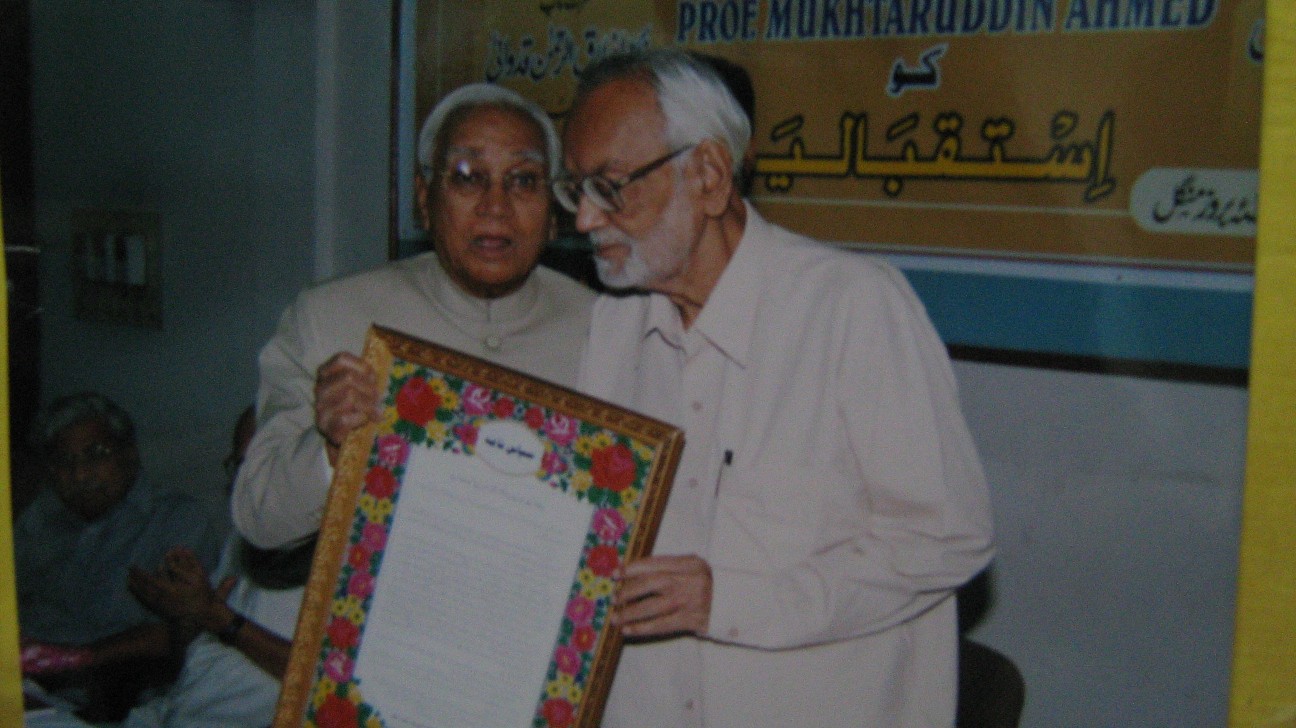
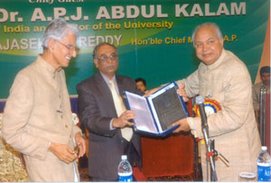
Meer Academy, Lucknow in 1965, the Certificate of Honor from President of India, Ghalib Award in 1983, and was presented a commemorative volume ‘Nazr-e-Mukhtar edited by Dr Malik Ram in recognition of his literary and educational services on his 64th birth anniversary in 1988, as already referred to above, and was awarded the Imam Ahmad Raza Award in 2001. In 2005, the Ghalib Institute organized a function honoring him for his contributions to the literary world. His selection for receiving this year’s ‘Sir Syed Day Life Time Achievement Award’ from the Aligarh Alumni Association of New York Tristate is another befitting tribute to him.

Mukhtar Sahib is a great letter writer. He receives a lot of correspondence and promptly replies all letters as a matter of duty. All letters are earmarked on receipt and kept chronologically in separate large envelopes with dates when the replies were sent noted. The letters cover a wide range, from being personal, to containing questions about literary matters. His accumulated correspondence with many literary experts in Arabic and Urdu of the subcontinent, the Middle East and the rest of the World could constitute several books. He also writes his diary regularly. In fact, it is really impossible to take account of the prodigious amount of work that he has done in any detail.

I have known Prof. Mukhtar Uddin for the last 60 years but he did not know me. He is senior to me by seven years in age but only by four years in terms of Aligarian seniority; he came to Aligarh in 1943 and I joined this institution in 1947. He resided in Sir Syed Hall and I in the Viqarul Mulk Hall. He belonged to the Faculty of Arts and I belonged to the Science Faculty. As a matter of fact, we were poles apart in terms of Aligarh topography. I lived in the north and he in the south of the campus. However, even as a student, he had shown great spark of academic and intellectual seriousness of purpose and single-minded devotion to his academic pursuits. As already mentioned, the editorship of Aligarh Magazine’s Ghalib Number was one of his earliest academic accomplishments while he was still a graduate student. I came to know of him through that magazine, which has remained one of the best documents published under the banner of the university as far as its editorship as well as its literary contents are concerned. It remains to this day a monumental work of literature, especially on the great poet, Ghalib. Right from the beginning, one could see that with the passage of time Prof. Mukhtar Uddin was destined to reach great heights of academic excellence in the areas of his chosen research. Although he married very young at the age of 21, when he was a student of Intermediate, undeterred by opposition from various relatives who feared that he would not be able to concentrate seriously on his education, his dedication to scholarship continued unabated.

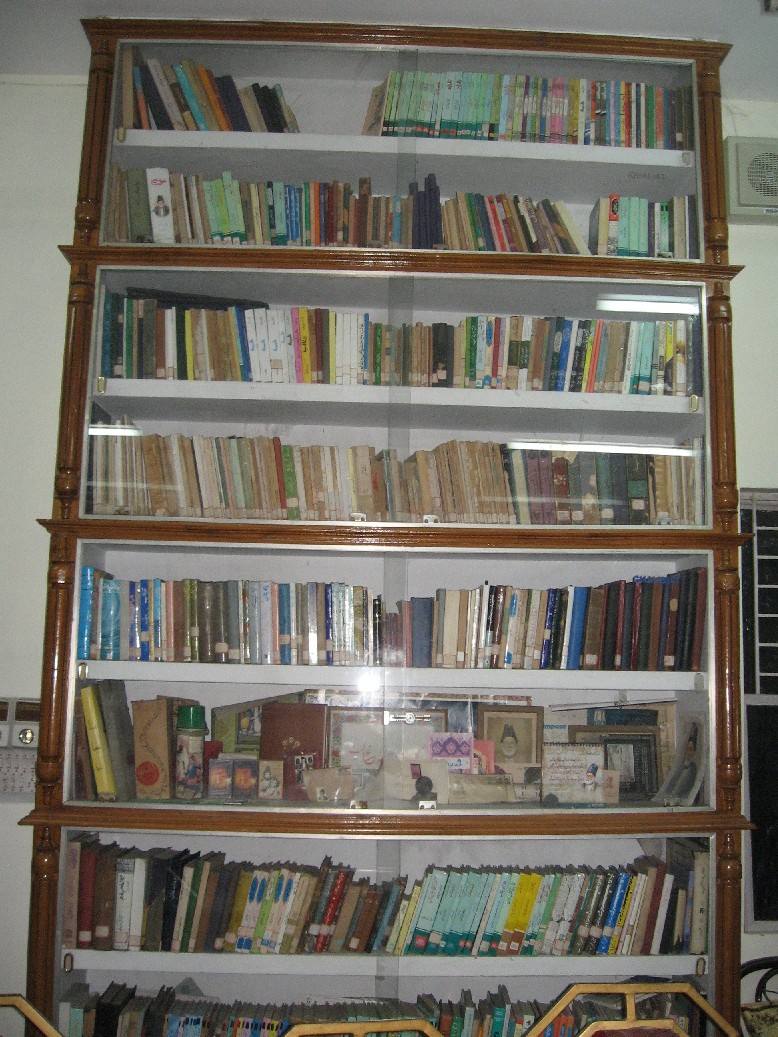
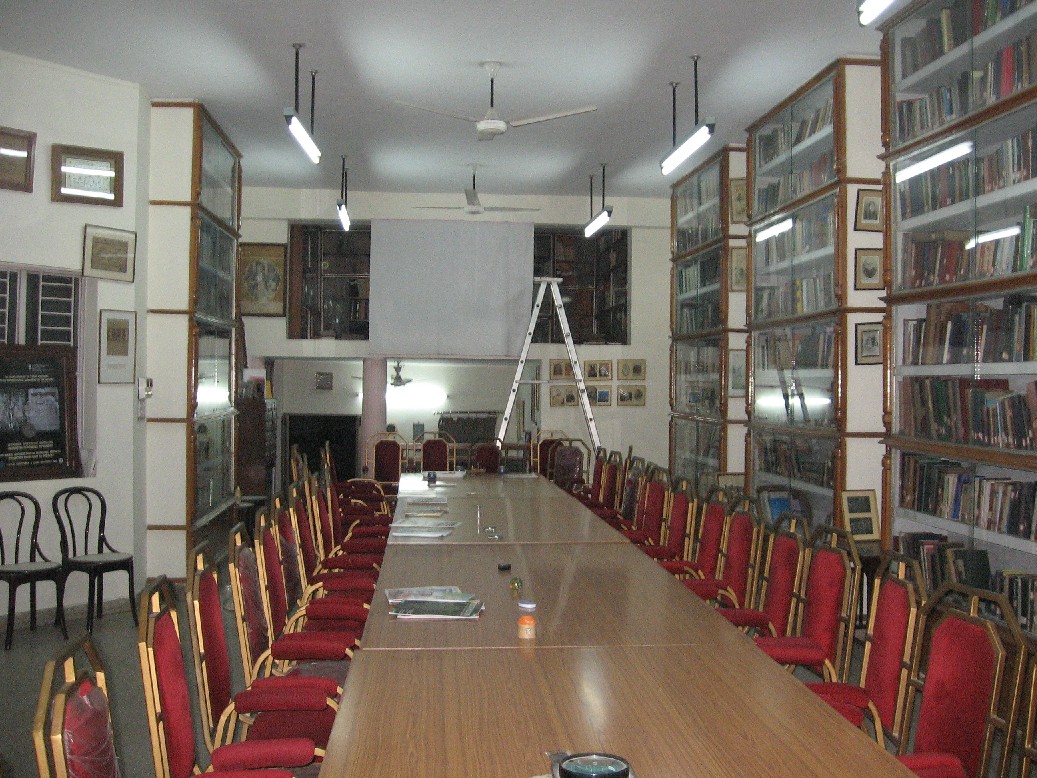
I had seen Prof. Mukhtar Uddin on the campus and had heard about him and his academic achievements and the respect in which he was held as one of the best intellectuals and able professors of the AMU. I also knew that his personal library held more than eighteen thousand books, journals, original manuscripts and hundreds of

letters written by famous men of literature. My love for Urdu books was more than enough reason to visit his library but there was no occasion to meet him. After my retirement, I was free to pursue my love of Urdu and wanted to meet Prof. Mukhtar Uddin. Ibne Sina academy provided a few but rare opportunities of meeting famous people at some of its regular meetings. Still I was in awe of Prof. Mukhtar Uddin and did not know how to pay a visit to his house and meet this great man at a personal level.

By this time, I had published my autobiography, ‘Main Kiya Meri Hayat Kiya.’ Prof. Mukhtar Uddin had also read it and thus he had become familiar with the name of an obscure novice dabbling in Urdu writing, who happened to be a science student and a teacher. I had heard that he had a very famous book - a dewan of Ghalib called Nuskha-e-Khawaja, edited and published by Prof. Syed Moeen Ur Rehman of the GC University of Lahore. I was very keen to see that book, and Taqreeb kuch tu behr-e-mulaqaat chahiye, I used this as a ruse to visit Prof. Mukhtar Uddin.

Meeting Prof. Mukhtar Uddin was a delightful experience for me. I found him to be very kind and courteous. He received me with great love and affection and willingly showed me the book I wanted to see and even lent it to me to take it home and see it at leisure. I was deeply moved by his generosity and his faith in me that I would take care of his precious and rare book, though it was our first meeting. This was the beginning of our relationship, which has developed into a very close association over the last 3-4 years. His good nature and will to help his students, fellow faculty members, and friends is rather remarkable. Once I suggested to Prof. Mukhtar Uddin to make a note of the books that he lends to people so easily and willingly. He replied. ‘Giving and lending books to people is my duty, to return them is the duty of the persons who borrow my books.’ I hope no body breaches his faith and confidence in human nature.

In the last few years of my association with Prof. Mukhtar Uddin, I have found him to be a man of great intellectual and academic virtues without any signs of arrogance pertaining to his immense intellectual achievements or his exalted place and standing in the academic and literary world of Arabic, Urdu and Persian literature. He is very soft-spoken, listens more than he talks and shows great interest in whatever one has to say and never imposes his will on anyone. When I talk of science and biology to him, he pays the utmost attention and would ask any question that comes to his mind. I have found him to be a very simple, benevolent and affectionate person with immense interest in his work and reading new books. He devotes most of his time, sometimes in excess of 12-16 hours a day to his reading and writing and if he lays his hands on some very interesting book, he may remain awake the whole night to finish it. Once he was staying with a friend who put him up in his guest room/library. Mukhtar Sahib found the library well stocked and when he saw a book that he hadn’t read, he picked it up and kept on reading till he heard a call from downstairs ‘Doctor Sahib Nashta

tayyar hai, tashreef lay aaiye’. He did not realize that he had continued reading all night and it was breakfast time. The book contained only 600 pages!!!

Though very soft spoken and a quiet person, he has a great sense of humor that comes out particularly in his Urdu essays, his diaries and travelogues which have been published from time to time in various Urdu periodicals in the sixties and seventies. Many anecdotes of his student days at Aligarh are included in such writings. His Urdu writing style is simple, unencumbered by verbosity or usage of difficult words and hardly a word seems to be redundant or unnecessary.

Mukhtar Sahib has been witness to an era of great turbulence and upheaval which saw the independence of the country as well as its partition. Throughout all the ups and down of political as well as other changes that altered the entire face of life at Aligarh compared to what it used to be when he joined the university as a young student in 1943, Mukhtar Sahib has steadfastedly remained loyal to Aligarh and has never entertained the idea of moving to greener pastures although he could have any lucrative job anywhere in the world just for asking and did indeed receive unsolicited offers of highly paid position at the University of Punjab, Pakistan, University of Wisconsin, Madison and Calcutta University. The changes that took place in the intellectual environment of the university particularly in the areas of literature and poetry due to the rise and fall of the Progressive Writer’s Movement in particular, the decline in the standards of education and in personal behaviors of students and faculty alike, deserve to be chronicled in the context of the life and times of a famous Aligarian like Mukhtar Sahib. Although he has written numerous articles from a first person perspective such as Mukhtar Uddin Arzoo - Khud Nawisht, Meray Bachpan Ka Azeemabad, Aligarh Kay Shub-o-Rooz, Yadoon Kay Chirag, Tulabai Aligarh Dayar-e Farang Main, Phool Khile Hain Gulshan Gulshan etc, there are not compiled in the form of a unified autobiographical compilation and published as a book. One sincerely hopes that he will write his autobiography in his inimitable style of subtle humor which will encapsulate the vast panorama of his eventful life against the backdrop of one of the most ‘PurAashaub’ era of our university.

Professor Ahmad’s life to date can be summed up in one line of a couplet of Allama Iqbal:

Narm dum-e-Guftagoo, Garm Dum-e-Justujoo

REFERENCES:

1. Nazr-e- Mukhtare, compiled by Malik Ram, Majlis-e-Nazr-e-Mukhtar, New Delhi (1988)

2. Mukhtar-Nama compiled by Atta Khursheed and Mehr Elahi Nadeem, Aligarh Heritage Publications, Aligarh (2002)

3. Professor Mukhtar Uddin Ahmad, Muhaqqiq aur Danishwar, compiled by Shahid Mahli, Ghalib Institute, New Delhi (2005)

Sunday, April 29, 2007

Dr. Obaid Siddiqi


Professor Obaid Siddiqi

Born: 7 January 1932, Basti, Uttar Pradesh
Wife: Dr. Asiya Siddiqi (served in Dept. of History, AMU Aligarh)
Parents: Mr. M. A. Qadeer Siddiqi and Mrs. Umme Kulsum
Brother: Prof. Aslam Qadeer (Ex-Dean faculty of Engg. & Tech. AMU Aligarh)
Education : M.Sc. from AMU Aligarh in 1953
Ph.D. from University of Glasgow, UK in 1961


Career:
· Hon. Professor, Founder & Emeritus Director

TIFR National Centre for Biological Sciences, Bangalore
· Chancellor, Maulana Azad National Urdu University, 2005-Till date
· President National Academy of Sciences(NAS), India : 1986-88
· Vice-President: 1983-85
· Council Member NAS : 1974-91
· Member, National Academy of Sciences (NAS), India, 1968- Till date
· Member, National Academy of Sciences, USA, 2003-Till Date
· Sr. Associate. Fellow, Royal Society of London,
· Director: TIFR, National Centre for Biol. Sc., Bangalore, 1993;
· Sherman Fairchild, Distinguished Scholar 81-82, 86;
· Gosney Fellow 72-73,
· Visiting Professor Cambridge Inst. of Tech., USA: 1968, 1970-71;
· Visiting Associate Yale Univ., Dept. of Biophysics in 1966;
· Jawaharlal Nehru Centre for Advanced Scientific Research, Bangalore:
· Hon. Prof. National Inst. of Advanced Studies, Bangalore:
· INSA, TWAS, Maharashtra Academy of Science.
· Pennsylvania Univ., USA: Post doctoral Fellow 61-62;
· Lallor Foundation Fellow, Cold Spring Harbor Lab., USA, 1961
· Res. Scholar, IARI, Delhi: 1957-58
· Lecturer, AMU Aligarh, 1954-57


Award:

· Padma Vibhushan, 2006
· B.C. Roy Award, 2004
· Sir Syed Life Time Achievement Award, AMUAA New York, 2004
· Pride of India Award, AFMI, USA, 2004
· INSA Aryabhata Medal 1992;
· Goyal Prize 1991;
· Birla Smarak Kosh National Award 1989;
· Padma Bhushan 1984;
· Bhatnagar Award 1976;
· Honorary D.Sc. from AMU Aligarh., BHU Banaras & Jamia Hamdard Delhi.


India has produced many stalwart scholars and scientists in recent times. A few of them have earned Nobel Prize after they became expatriate. On the other hand, for those who opt to work in India, a membership to the US National Academy of Sciences is considered the highest international scientific recognition of their contribution to science. Professor Obaid Siddiqi is one of a few non-US citizens inducted as a Fellow of the prestigious scientific academy. This fellowship bestowed on him brings an honor to the country of his residence, India. The Indian Diaspora joins the citizen of India in feeling proud for Dr. Siddiqi’s achievement.

Obaid Siddiqi started his scientific career at the Aligarh Muslim University as a lecturer after graduating from the university. His romance with molecular biology began long before it became the ‘cool’ area of research of modern times. Realizing Obaid’s inclination towards the field, his teacher-cum-colleague Riyasat Khan of AMU’s Botany Department encouraged him to work on mapping of rust-resistance genes in wheat at the Indian Agricultural Research Institute in Delhi. He then proceeded to work for his PhD at the Department of Genetics at the University of Glasgow. Even before he had completed his degree, Obaid was offered a post-doctoral position at the MIT to work with a giant in genetics filed, Dr. Alan Garen. Alan Garen later moved to the University of Pennsylvania and took his postdoctoral colleague with him. Together they discovered the suppressors of “nonsense” mutations that led to the discovery of “nonsense” codons, the stop signals in the genetic code. In early seventies, his work with Professor Benzer of the California Institute of Technology led to the identification of several genes that control nerve conduction and synaptic transmission. Obaid and his associates’ pioneering work on neurogenetics of fruit fly, Drosophila, has opened up the prospects of an integrated genetic and neurobiological investigation of chemosensory perception.

Obaid’s desire to return to India was fulfilled when Homi Bhabha of the Tata Institute of Fundamental Research, Mumbai, invited him to start a molecular biology group at the institute in early 1960s. Obaid recruited top-class scientists and put the TIFR’s molecular biology group on world map of genetics. Later, with the support of government of India, he founded TIFR’s National Center for Biological Sciences at Bangalore. The mandate of this Center is basic research in the frontier areas of biology and currently it has many distinguished scholars working in various fields of science with state-of-the-art facilities testifying that Obaid’s brainchild, NCBS, will one day flourish into a research institute of international repute.

Obaid has mentored energetic scholars, who have distinguished themselves in the field of genetics and are occupying highly visible academic positions in India and abroad. The list includes: R. N. Singh, Vijay Sarthy, Satpal Singh, Sheela Dhonde, Veronica Roderiques, Kavita Arora, V. C. Jayaram, Shahid Siddiqui, Ravi Rajan, Rashid Mistry, Swati Joshi, Champakali Ayub, and Anil Gupta.

Obaid’s name is held in high esteem among the biologists. He has published hundreds of original research papers and articles in internationally recognized scientific journals and lectured at prestigious institutions. He has been awarded almost all distinguished scientific honors. He has been a visiting Professor at Massachusetts Institute of Technology and Gosney Fellow and twice Sherman Fairchild Distinguished Scholar at the California Institute of Technology. He is a life Member of Clare Hall, Cambridge University. A past president of the Indian Academy of Sciences, Fellow of the Indian National Science Academy, the National Science Academy, The Royal Society of London, the Third World Academy of Sciences Trieste, and Foreign Associate of the U.S. National Academy of Sciences, Washington. Prof. Siddiqi is a recipient of the Shanti Swaroop Bhatnagar Prize, The Aryabhat Medal, The Indian National Science Academy Jubilee Medal, The Goyal Prize, the Birla Smarak Kosh Award for Biological Sciences, Bhasin Award, GM Modi Innovative Science and Technology Award, The B.C. Roy Award for Biomedical Research, and the Indian civil honor Padam Bhushan.

The Aligarh Muslim University, Banaras Hindu University and Jamia Hamdard have conferred honorary D.Sc. degrees on Professor Siddiqi.

Obaid Siddiqi was born on 7th January 1932 in Basti to a family of scholars. His siblings have also distinguished themselves in academic medicine, science, engineering, social, and literary fields. In his youth, he wanted to be a professional photographer; however, it appears that his uncle’s persuasion directed him to science and his ambition to photographing turned into ‘mapping’ of nature’s mysteries. Although he is in his early seventies, he keeps himself engrossed in scientific research as an Emeritus Professor of Molecular Biology at the NCBS. It is good to know that Obaid’s life is not just science; he has a keen interest in sports and literature. He is very fond of Urdu poetry and Allama Iqbal’s following verse fits him well: BaRi mushkil se hota hae chaman meiN deedawar paeda.


(By Zafar Iqbal, Ph.D., 19105 Warrior Brook Drive, Germantown, Maryland.

The material help received from Professor Indira Chowdhry of TIFR Archives, Bangalore is highly appreciated).

Saturday, April 21, 2007

Dr. Abidullah Ghazi


Dr. Abidullah Ghazi

Birth: 6th July, 1936, Anbehta, Saharanpur (UP)-India

Education: M.A. (AMU Aligarh)-1959
M.Sc. (London school of Economics)-1967
Ph.D. (Harvard University)-1973

Social & Education Services:
i) Director, Iqra International Educational Foundation
(http://www.iqrafoundation.com)
ii) Chairman Board of Trustees, 2005-06
The Federation of Aligarh Alumni Associations (www.aligs.org)
iii) President, National Council of University Students of India-1959
iv) President, AMU Students Union, 1959
v) Honorary Secretary, AMU Students Union, 1954

Advisor to:
Pandit Jawahar Lal Nehru (Prime-Minister of India, 1947-64)
Dr. Rajendra Prasad (President of India, 1950-62)
Dr. Zakir Hussain (President of India, 1967-69)

Awards:
Citizenship Award (United States of America), 1983

Sanad-e-Imtiyaz for Seeratun-Nabi Program, Pakistan, 1983

Nishaan-e-Imtiyaz for Development of Educational Curriculum,
Pakistan, 1988

Personal Information:
Great-Grandfather : Maulana Abdullah Ansari
(Founding Nazim-e-Diniyat MAO College, Aligarh.
He led the Janaza Prayer of Sir Syed Ahmad Khan)

Father’s name : Mr. Hamidul-Ansari Ghazi (Editor Medina Urdu Newspaper - Bijnor)

Mother’s name: Mr. Maimoona Khatoon
(Daughter of Maulana Qari Tayyab
& Grand daughter of Maulana Qasim Nanotvi)

Wife’s name : Dr. Tasneema Ghazi

Brothers : Mr. Mohammad Tariq Ghazi, Former Chief Editor, Daily Saudia
Gazette, Jeddah (KSA)
Mr. Arshad Mansoor Ghazi, Secretary, Idarah, Tahzeeb-e-Jadeed
Aligarh, India

Books : i) Sareer-e-Khama (Compilation of his personal articles)
ii) Maulana Abdullah Ansari, Ahwaal, Khidmat aur Ilmi Asaar

Dr. Abidullah Ghazi founded Iqra' International Educational Foundation, in Skokie, Illinois, US in 1983 as a community project to teach American Muslim children about their faith. Since then it has published nearly 100 textbooks and supplementary "enrichment" books of non-fiction, fiction and poetry and now operates a book club and a bookshop as well. The group linked with Iqra' Charitable Society in 1987 and is still headed by Dr. Abidullah Ghazi. He and his wife, Dr. Tasneema Ghazi, were born in India, came to the United States to earn advanced degrees, and then stayed on with their young children.

Dr, Masood Haider of New Jersey (USA) wrote to AMUNetwork about Dr. Abidullah Ghazi and their Aligarh days;

Dr. AbidUllah Ghazi, whom I greatly admire. Ghazi sahib was two years senior to me and his contest for the presidency of the Student's Union against Mobashir Mohammed Khan remains a fascinating chapter in my collection of memories of AMU. Professor Wahid Uddin Malik, was one of the two closest friends of my late uncle Dr. Intisar Husain (the other being Dr. A.R. Kidwai); who always treated me like a part of his family as he did Ghazi sahib because his (Ghazi sahib's) father was associated with the newspaper 'Medina' Bijnor which was owned by Malik sahib's father-in-law. During the election the preposterous allegation was made that Ghazi sahib, related to a iconic family of the bastion of conservatism Deoband and a practicing Muslims could even remotely be considered to be a communist. In confusion, I asked Professor Malik what his take was on this allegation against Ghazi sahib and he categorically discarded any such possibility. However, the slogan of ' Islam Khatre main hai' used to serve as a potent political weapon and led to Ghazi sahib's defeat. Few years later, he was elected unopposed as the president of the union.

The reason that the ridiculous charge was made against Ghazi sahib was that although a devout Muslim he was not one of our 'run of the mill' orthodox, rigid and conservative Mullahs, which is precisely why I find his views so much in concordance with the Sir Syed model of the compatibility of religion with modernity. A spell binding speaker often sprinkling his speeches with subtle and underplayed humor, a poet, a Urdu writer in a unique inimitable style, a chronicler of the history of the AMU in the fifties, a person at peace with living in the West without spewing venom against the very country which has given all expatriates so much especially to practice our religion freely, a lifetime dedicated to the education of Muslim youth all over the World, Ghazi sahib with the infusion of a little more humility can truly serve as a role model for those young people who share the view that Sir Syed was the greatest Muslim reformist in at least in last 500 years. We need not revert to the time of the holy prophet to be good Muslims and should attempt in our own little way to break the vicious spiral of mindless, revolting and nihilistic extremism and fanaticism. There is no better example than of Ghazi sahib to prove that modernism and Islam can co-exist and one does not have to live in a particular environment to accomplish this feat.


Dr. Abidullah Ghazi :
A Distinguished Aligarian and Emissary of Islamic and Urdu Culture in
USA
Syed M. Naseem
Washington
DC
Dr. Abidullah Ghazi was born on July 6th, 1936 in Saharunpur (Peerzadgan) in U.P. His early education was in Deoband. After High school; he joined AMU and completed his B. A. and M. A. (Political Science) in 1959, M.S. from London School of Economics (1967), and Ph.D. from Harvard University in Comparative Religion in 1973. He was also associated with Jamia Millia Islamia, New Delhi as a teacher. He was Professor at Jeddah University for several years. He is a distinguished Old Boy of Aligarh Muslim University. He was elected Honorary Secretary Aligarh Muslim University Student’s Union in 1954 and President of Students Union in 1959-60. Same year he represented India in Australia, as President of the National Council of University Students of India in 1959. He established AMU student’s Union Rafi Relief Society to help poor students at AMU. He was awarded Saif Fida Hussain Gold Medal for best Speaker in 1954-1955 at AMU Convocation. He and his wife Mrs. Tasneema Ghazi, (M.A. Alig, M. A. Harvard and Ph.D. Minnesota) established Iqra International Educational Foundation in Skokie, Chicago. Subsequently, Iqra Foundation Branch was also opened in Bombay, Pakistan, Singapore, and Europe. Besides, he is also Director of many organizations such as, Indo Islamic Foundation (USA), Academy of South Asian Studies (Aligarh), American Foundation of Muslims of India (USA), and Consultative Committee of Indian Muslims, USA). During his stay in Saudi Arabia, he established Muslim University Assistance Endowment (MUSA) Foundation and is currently awarding hundreds of scholarships in Aligarh and elsewhere.
Through Iqra Foundation, he wrote more than 140 books in English, for Islamic schools, his books are part of syllabus in almost all Islamic schools through out the world (40 countries). These books have been translated in Urdu and Hindi for Indo-Pak schools. For his services, he was awarded Sanad-e-Pakistan (1983), Nishan-e-Imtiaz (1998), Citizenship Award (USA 1983), and Sark Award (India, 2007). He is Sahib-e-Quran, and lectured all over USA on Islam and Prophet Mohammad (PBUH) life. He also performed Nikah ceremony in USA (including my daughter’s Nikah) and Chief Guest during Sir Syed Day celebrations in USA, Europe, India and Pakistan. He is well known Urdu writer, ( novel- Inqlab: Ek Kahani Ek Tareekh) poet, his recent book on Urdu poem “Zikr-e-Saman Azaran” (2003) and Urdu prose book “Sareer-e-Khama” (second edition, 2004) introduced by Sayyed Hamid sahib former Vice Chancellor AMU and Chancellor Hamdard University, is very well received by Urdu lovers and is worth reading.


Interview : Dr. Abidullah Ghazi
(Published in Islamic Voice in October 2000)
Teaching Should be Centered Around the Child, his Needs and Temperament

Dr. Abidullah Ghazi hails from Deoband in Uttar Pradesh. Holding a Doctorate in comparative religion from Harvard University, he and wife Dr. Tasneema Khatoon Ghazi, (a doctorate in child psychology), have been pursuing the goal of an ideal Islamic curriculum in English with a passionate zeal. During his visit to Bangalore in 2000 he spoke to Maqbool Ahmed Siraj. Excerpts
Q: Why a new Islamic curriculum?
A: I read the Quran at the Darul Uloom, Deoband in Uttar Pradesh. I perceived that students were beaten up thoroughly while learning the Quran. The very thought of classes made them tremble with fears. I studied at Universities at Aligarh, London and Harvard. When I was a student at the Harvard, I had 3 1/2 year old kid. She used to say that she could go to school on her own as she was grown up. I juxtaposed this with a scene from African madrassa on TV where the children were being beaten. We both discussed the contrast and concluded that education in the West was centered around the child while in the Islamic world, it was centered around the book. So the Western curriculum takes in its stride everything that makes the child learn, develop curiosity and expect more and more of knowledge. These may be in the form of illustrations, charts maps and music.
I thought why Islam cannot be taught like that. On the initiation of our colleagues, I began preparing some books and a curriculum. Later we shifted to Gary in Indiana state, 40 kms from Chicago. In 1976, I met Rabita chief Dr. Abdullah Omar Naseef and Dr. Zainul Abedin of Institute of Muslim Minority Affairs. They encouraged me to take up this venture. The first book to come out was Our Prophet, an assignment from King Abdul Aziz University, Jeddah at Dr. Naseef’s behest.
But books were not enough. What was required was a curriculum. We studied the religious curriculum of Christians and Jews. The Jews teach the Old Testament on four levels. We estimated that we would need nearly 150 books to teach the Quran, Hadith, Fiqh, Sociology, moral sciences etc.
Q: But you were working in the USA. What objective did you set before yourself?
A: We were clear that the children must be taught the universal values of Islam and that our primary target was children who were growing up in a secular and plural country.
We developed systematic curriculum lesson by lesson for 40 minute period. Reason and rational informed its very foundation. Tasneema scrutinized the vocabulary which was to be graded as per the child’s comprehension level at a particular age.
Q: Project for the future?
A: We are now preparing the enrichment literature which is known as non-detailed literature in India.
We are also preparing lessons for teachers and we will put them on the Internet. We will develop a whole system of examination, certification etc. and ultimately make it an Open University. Our emphasis is on quality production of books.
Q: Pictures in Islamic books are resented by the ulema. How do you cope with modern needs for pictures and opposition from the traditional class?
A: We have minimized the use of pictures. Often need for pictures in books narrating Prophet’s stories have been fulfilled with silhouettes.
Q: Maslak too poses problems particularly in cosmopolitan crowds of Muslims in India or the US?
A: We do not go into polemics. We have avoided sectarian differences at the lower level. Later all different mazahib (schools of opinion) have been put side by side.
Q: No general agreement is found on certain geographical maps. How an international syllabus should look at it?
A: This is a sensitive question. In a series of books on Muslim social studies there have been questions over Palestine and Israel maps. Jews get exercised and unleash charges of anti-Semitism. There cannot be any universal agreement on maps.