Sunday, December 9, 2007

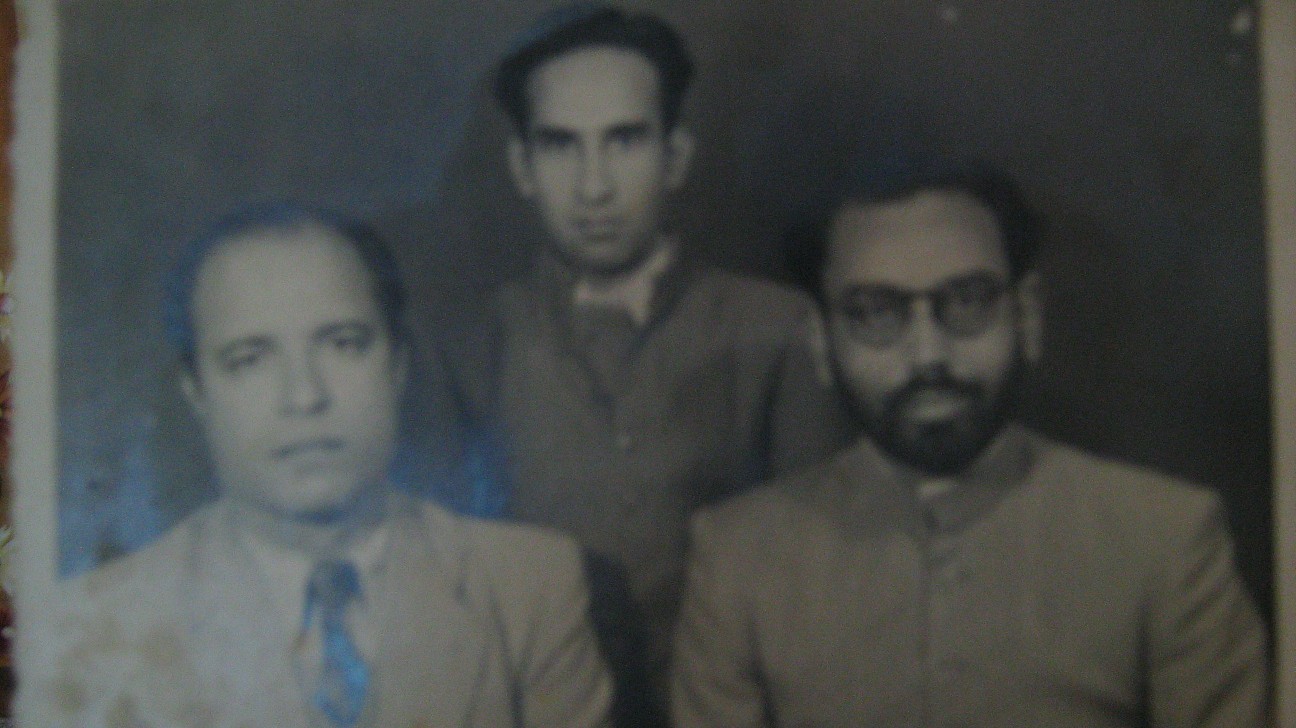
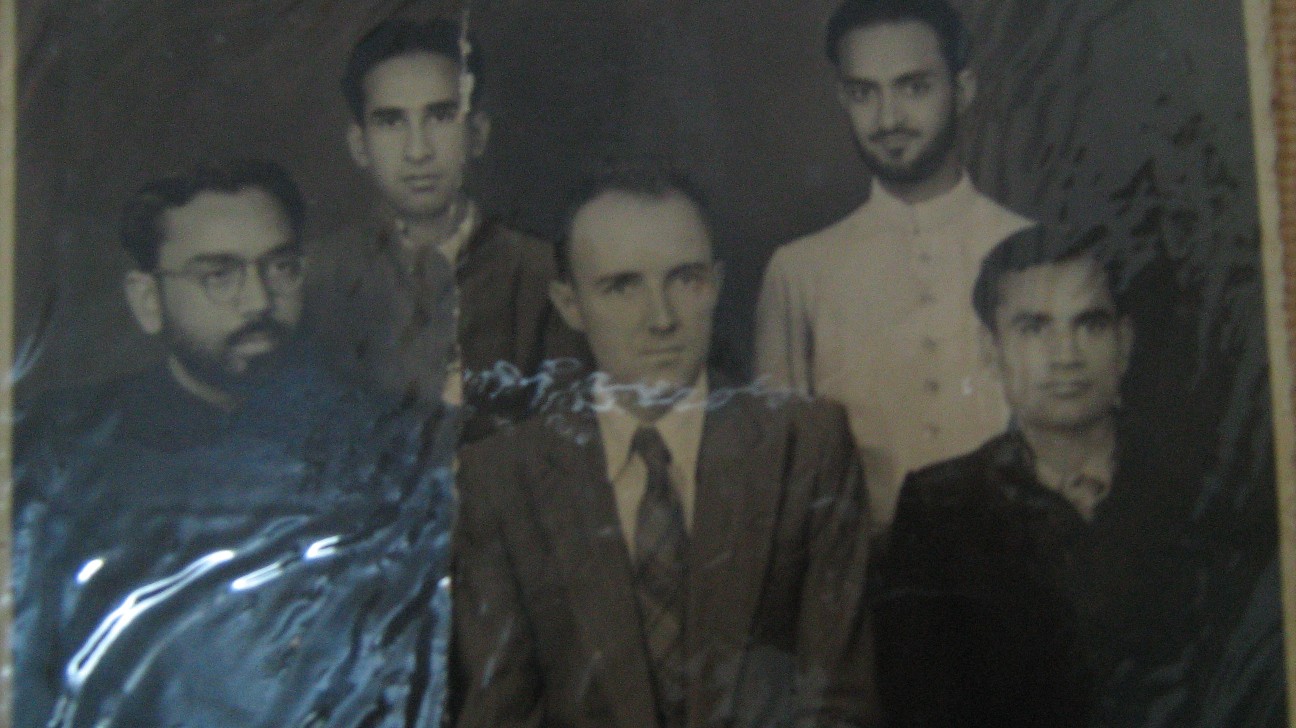
Mohd Shafi


Mohd Shafi

Born: 1st August 1924, Jaunpur (UP) India.
Died: 9th December, 2007, Aligarh (UP) India.
Father: Husain Ali
Children: Prof. Mohd. Jamil (Civil Engg., AMU Aligarh), Dr. Bilquees Bano


Education: 1945: B.A. Allahabad University
1947: M.A. (Geography), AMU Aligarh
1956: Ph.D. from London School of Economics with Prof. Dudley Stamp

Career: 1948: Lecturer, Department of Geography, AMU Aligarh
1956: Reader, Department of Geography, AMU Aligarh
1962: Professor, Department of Geography, AMU Aligarh
1962-84: Chairman, Department of Geography, AMU Aligarh
1966-68: Dean, Faculty of Science
1959-62: Provost, Sir Shah Sulaiman Hall
1984: Professor Emeritus in Dept. of Geography AMU Aligarh
1972-74: Director Academic Program (DAP)
1979-80: Pro-Vice Chancellor of Aligarh Muslim University

1985-1993: Vice-President, International Geographical Union
http://www.helsinki.fi/science/igu

1987: Member, Royal geographical Society of London.
1992-95: Pro-Chancellor of Aligarh Muslim University


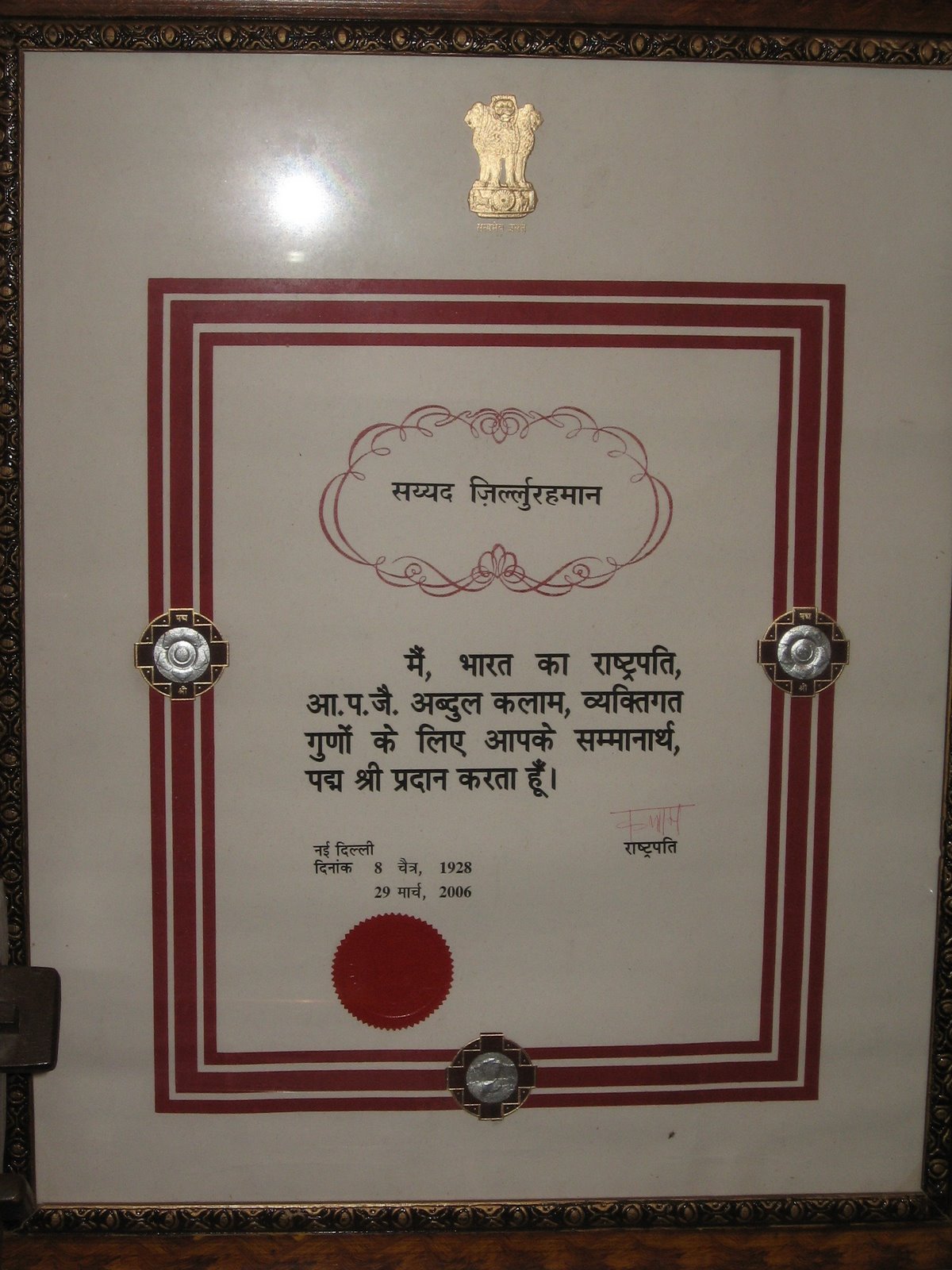
2001: Padama Shri by the Government of India
2001: Bhoogol Ratna Award by Bhoovigyan Vikas Foundation, New Delhi.
2002: "Saraswati Award" in Environmental Science and Ecology by the UGC

Member: The Scientific Committee of the International Social Science Council

“Laureate d’ honneur” by the International Geographical union at Glasgow,
UK. 'Academician' by the Russian Academy of Sciences.

Member : Bureau for Promotion of Urdu

President : Indian Geographical Union, Indian Geographical Council.

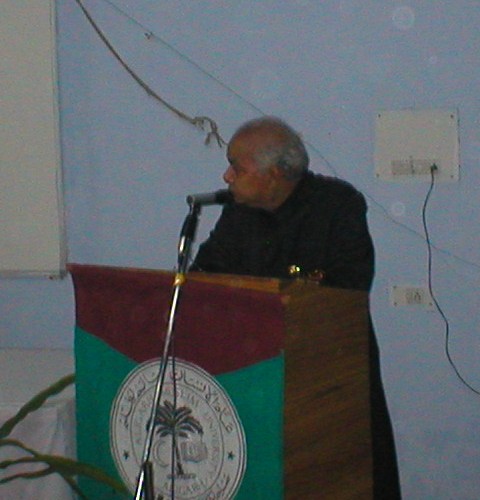
Mohd. Shafi was born on 1st June, 1924 in historical city of Jaunpur in eastern Uttar Pardesh. In 1945, after completing his graduation from Allahabad University, he joined Aligarh Muslim University in M.A. in Geography.

Association with Aligarh :
Mohd. Shafi completed his M.A. in Geography in 1947. Like other part of the country, Aligarh Muslim University campus was also not safe from the socio-political activities of Indian Freedom movement during this time. But this did not affect the studies of young Mohd. Shafi. After completing his M.A., he joined AMU as lecturer in department of Geography. He completed his Ph.D. from London University in 1956 and was appointed as Reader in Geography department of AMU. His Ph.D. work was well recognized at International level. His research area Agricultural Geography got attention in the research community an department of Geography of AMU Aligarh was declared a center of excellence for the subject buy University Grant Commission and Mohd. Shafi was appointed its Coordinator. His research work on the Food System of India has been recognized with high honors in many countries, and by the United Nations.In 1962, he was appointed as Professor in the same department. In the same year he became Chairman, Department of Geography and served on this position till 1984. He has published 11 books and 130 research papers, and has supervised 34 doctoral works. He also served as Provost for 3 years and Dean Faculty of Science. In 1972, Prof. Abdul Aleem, Vice-Chancellor of AMU Aligarh appointed him as Director of Academic Program (DAP). He served as DAP till 1974. His academic excellence and administrative abilities were noticed by AMU Vice Chancellor Prof. Ali Mohammad Khusro and in 1979 he appointed him as Pro-Vice Chancellor of Aligarh Muslim University. He served as Pro Vice-Chancellor for two years. In 1984, he retired from his services but Department of Geography appointed him as Professor Emeritus.

Professor Shafi is the first Indian Geographer in the Indian sub-continent including SAARC countries to receive this prestigious award at the 30th International Geographical Congress held at Glasgow in U.K. More than 1800 geographers from 81 countries participated in the Congress. The Russian Academy of Sciences also conferred on him its highest award 'Academician'. The Royal Geographers Society, London made him its Honorary Corresponding Member of the Council and the American Geographic Society offered him its Fellowship. In 2002 he has been honored for "Saraswati Award" in Environmental Science and Ecology by the University Grants Commission. On April 22, 2001 at New Delhi Bhoovigyan Vikas Foundation awarded him the maiden Bhoogol Ratna Award, which consists of Rs One lakh and a citation.

In AMU Court meeting on July 5th, 1992, Professor Mohd Shafi was elected as Pro-Chancellor of Aligarh Muslim University for a period of 3 years.

On 9th December 2007, Professor Mohd Shafi died in Aligarh. He was laid to rest in University Graveyard 'Mintoyee'.

=======================
Mirza A. Beg
Alabama

Dear friends from the Aligarian community:

Usmani saheb has perceptively included the name of Dr. Mohammad Shafi in his Aligarians series. His passing away is a very sad occasion as such occasions are. We know that our stay in this temporal realm is limited and by the time we get into seventies, the door to the hereafter is a little closer and a bit ajar.

Shafi sahib crossed to the other side, but did not leave a vacuum in the usual sense of the word. He left hundreds of grateful students to carry on his legacy in his chosen discipline of geography as well as many others whom he touched as dean and Pro Vice Chancellor. He has left behind a body of work that would carry forward the ideas and knowledge he left behind to carry on his name and legacy.

I was fortunate enough to have known him and benefited from his advice when I joined AMU as a youngster leaving a sheltered life in 1959. I had only heard of him from his older brother and mentor Sunhan Ali Saheb. Subhan Saheb, as he was known, was my teacher of mathematics and geography in high school. I will take this opportunity, to say a few words about Subhan Saheb, valued elder brother and mentor of Shafi Saheb. I know Shafi sahib would have appreciated it.

He talked of Shafi Saheb with such love and took such pride, in his accomplishments. All of us have some teachers whom we can only never repay, but we can not even praise them enough. Subhan Saheb was one of those rare teachers. Though I was not a student of Shafi Saheb, and I left Aligarh after B.Sc. about the time he became Professor and Head of the Geography Department. I knew he was in the mould of his older brother; a dedicated and good teacher and a mentor to all those who came close to him.

Subhan Saheb was a very strict, no nonsense kind of teacher, but he never had to raise his voice in the class. He had a bearing that impelled even the most disorderly disruptive student to behave. Even when the students who did not like math and found it hard that is why they did not particularly care for Subhan sahib as well, criticized him behind his back with respect. Subhan Saheb had a unique capability to nudge his students to do the best they were capable of achieving.

I did not visit AMU as often and did not get to see Shafi Saheb that often though I kept track of his achievements, but I made sure that every time I visited Jaunpur my hometown I spent some precious time with Subhan Saheb. He invariably talked of Shafi Saheb with great affection. I owe a lot to both the brothers, my mentors. With sadness,

Mirza A. Beg


Wednesday, December 5, 2007

Syed Hamid


Syed Hamid

Born: 28th March, 1920, Faizabad (UP)
Father: Mr. Syed Mahdi Hasan
Mother: Mrs. Sitarah Shahjahan Begum
Brothers: Syed Muhammad (AMU Alumni, Hockey and Football Color Holder)
Syed Mustafa (AMU Alumni)
Wife: Mrs. Surayya Hamid
Children: Samar, Saman and Faraz Hamid.

Education:
Govt. Inter College, Moradabad, Govt. High School, Unnao, State High
School, Rampur
1937-1939: B.A. Aligarh Muslim University
1939-1941: M.A (English) Aligarh Muslim University
1941-1947: M.A. (Persian) Aligarh Muslim University
(Resident of S.S. Hall - S.S. West, 62)
Member University Hockey Team and Color Holder

Career:
Provincial Civil Services: 1943-49
Served in Bijnaur, Moradabad and Buland Shahar (UP)

Joined Indian Administrative Services (I.A.S.) in 1949
i) 1960-65 : Deputy & Joint Secretary, Industries and Foreign Trade, Govt. of India
ii) 1966- Director of Fisheries (Lucknow-UP)
iii) 1966-68: Administrator, Nagar Maha Palika, Allahabad (UP)
iv) 1968-71: Joint Secretary, Planning Commission, New Delhi
v) 1971-75: Joint Secretary, Ministry of Home affairs, New Delhi
vi) 1975-76: Additional Secretary, Ministry of Communications, New Delhi
vii) 1976-80: Founder & Chairman, Staff Selection Committee, New Delhi
viii) 10th June 1980-26th March 1985 : Vice-Chancellor, AMU Aligarh
ix) 1992- Till Date: Honorary Secretary of Hamdard Education Society, New Delhi
x) 2000- Till date: Member, Management Committee, Darul Musannefin
Shibli Academy Azamgarh (UP)- India
xi) 1999-Till Date : Chancellor, Jamia Hamdard, New Delhi

Books:
i) Nagar-Khana-e-Raqsaa(n) : Collection of his critical writings published in 1984

ii) Syed Hamid: Ke Gum Usmei(n) Hai(n) Afaaq
Biography by Dr. Najma Mahmood (Dept. of English, AMU Aligarh)
iii) Irfan-e-Syed Hamid: Prof. Asghar Abbas & Dr. Shahabuddin Saquib
(Dept. of Urdu AMU Aligarh)


Syed Hamid was born in an average muslim family of Syed Mehdi Hasan & Sitarah Shahjahan Begum in Faizabad on 28th March, 1920. The family was originally from Moradabad. Syed Mahdi Hasan had a great passion for history, literature and Islamic education. In 1931, Syed Hamid completed 6th grade from Moradabad Inter College and moved to Rampur where his father joined a new job in Estate of Rampur. Just after one year they moved back to Moradabad and completed his Intermediate (12th grade) from Moradabad Inter College in 1937. During his education at Govt. Inter College Moradabad, he was Hockey Captain and represented the college in numerous tournaments. In 1937, Syed Hamid got admission in AMU in B.A. Very soon he also became a member of University Hockey which had Mohammad Hasan Abbasi, Shakoor, Yaseen and Dilbar as front line players. Syed Hamid was a member of the winner team of Inter-Varsity Hockey Tournament held in Aligarh in 1941 under the captaincy of Syed Mohammad Hasan Abbasi. In 1941, he completed his M.A. with English literature and moved to Aftab Hall from Sir Syed West. After just completing M.A. (Previous) in Persian in 1942, he got selected for provincial Services which he joined in 1943 and served in the district of Bijnaur, Moradabad and Buland Shahar. During his provincial service, he completed his M.A. in Persian from AMU in 1947. He had witnessed the tenure of Sir (Dr.) Ziauddin Ahmad and Sir Shah Sulaiman as Vice Chancellors of Aligarh Muslim University and Prof. Abu Bakar Ahmad Haleem (also known as A.B.A. Haleem or ABA Haleem) as Pro-Vice Chancellor. He was very much impressed by these gentlemen who put their best to serve AMU and inherited a lot of their qualities and passion for our beloved alma mater. This was the time when Aligarh had teachers like Prof. Mohammad Habib, Prof. Hadi Hasan, Prof. Zia Ahmad Badayuni and Prof. Rasheed Ahmad Siddiqi. This was also the time when Ale Ahmad Suroor was making inroads to his glory.

Syed Hamid personifies humility and loves the company of humble people. However, his circumstances have not been humble – a former officer of the prestigious Indian Administrative Service, he went on to become the vice-chancellor of Aligarh Muslim University, his alma mater. "That was the greatest honor one ever got". He never rested on his laurels, nor does he like anybody doing that. Many people from the generation of Muslims born immediately after independence find a role model in him. Here is a man who managed to build a sound academic record at a moment in India’s history when Muslims were afflicted with uncertainty.


Association with Aligarh Movement:

After having an illustrious career of 6 years in Provincial and 31 years in Indian Administrative services, Syed Hamid joined his own Alma Mater as its Vice-Chancellor on June 10th, 1980.

Former AMU Vice Chancellor, Col. Bashir Hussain Zaidi once said “AMU Vice-Chancellorship is just like a woman with six husbands- The State Government, The Central Government, The Millat, The Teachers, The Students and The AMU Court”.

No one other than Syed Hamid knows how true, Col. B.H. Zaidi was in his remark. Syed Hamid joined AMU as VC at a very crucial juncture; when AMU community was fighting for its lost minority character and AMU became a political hobnob in the affairs of Ummah. AMU fraternity had already suffered “Dadri trauma”, hundreds of arrest were made, numerous scarifies their lives for the cause and yet AMU did not received its lost Minority Status. This was leadership which formulated the Amendment Act in December 1980, which was later approved in January 1981 by Central Government. Syed Hamid added “Section 5 -2C to expand Aligarh Muslim University’s Role in the betterment of community and specially minorities of India. The Amended Act of 1981 gave student representation to AMU students in the University Court.

His tenure as AMU V-C was marked by very tough, painful decisions, and an unwavering will to stem the rot. His administrative skills as a seasoned bureaucrat came in handy. His seniority in the IAS fraternity (he had only recently retired from service) ensured the respect of Aligarh district magistrate and superintendent of police; his academic record got him the respect of teaching community. That left students to concentrate on their study and stay away from mischief. He played a key role to bring University on normal track which had a lot of distraction due to a prolong 16 year of struggle for Minority Character. He made special arrangements for Curfew bound Aligarh & Moradabad City students to appear in the exams. He took strong exception to bring more than 150 University Staff who were serving abroad on extra ordinary leaves (EOL). This act put him in the front line of opposition from a large section of teaching staff community. A reckless statement from a senior faculty member triggered another chaos in campus. All efforts for a truce were failed. Student went on strike and continued their protest. On 12th May 1981, police entered into the campus and opened fire and an innocent student of S.S. Hall (North), Aftab Ahmad died. University was closed sine-die, hostels were vacated, and actions were taken against student leadership.

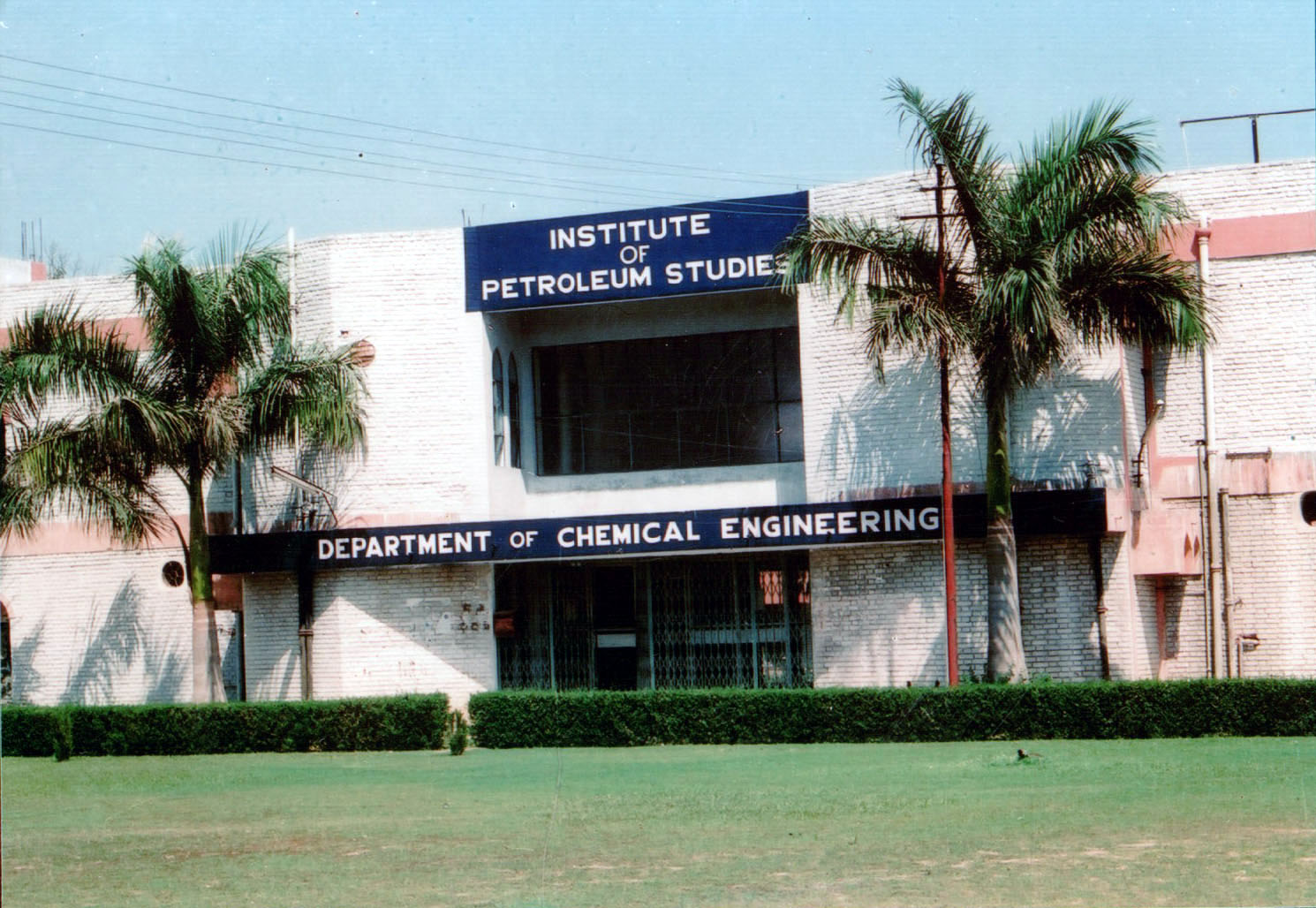
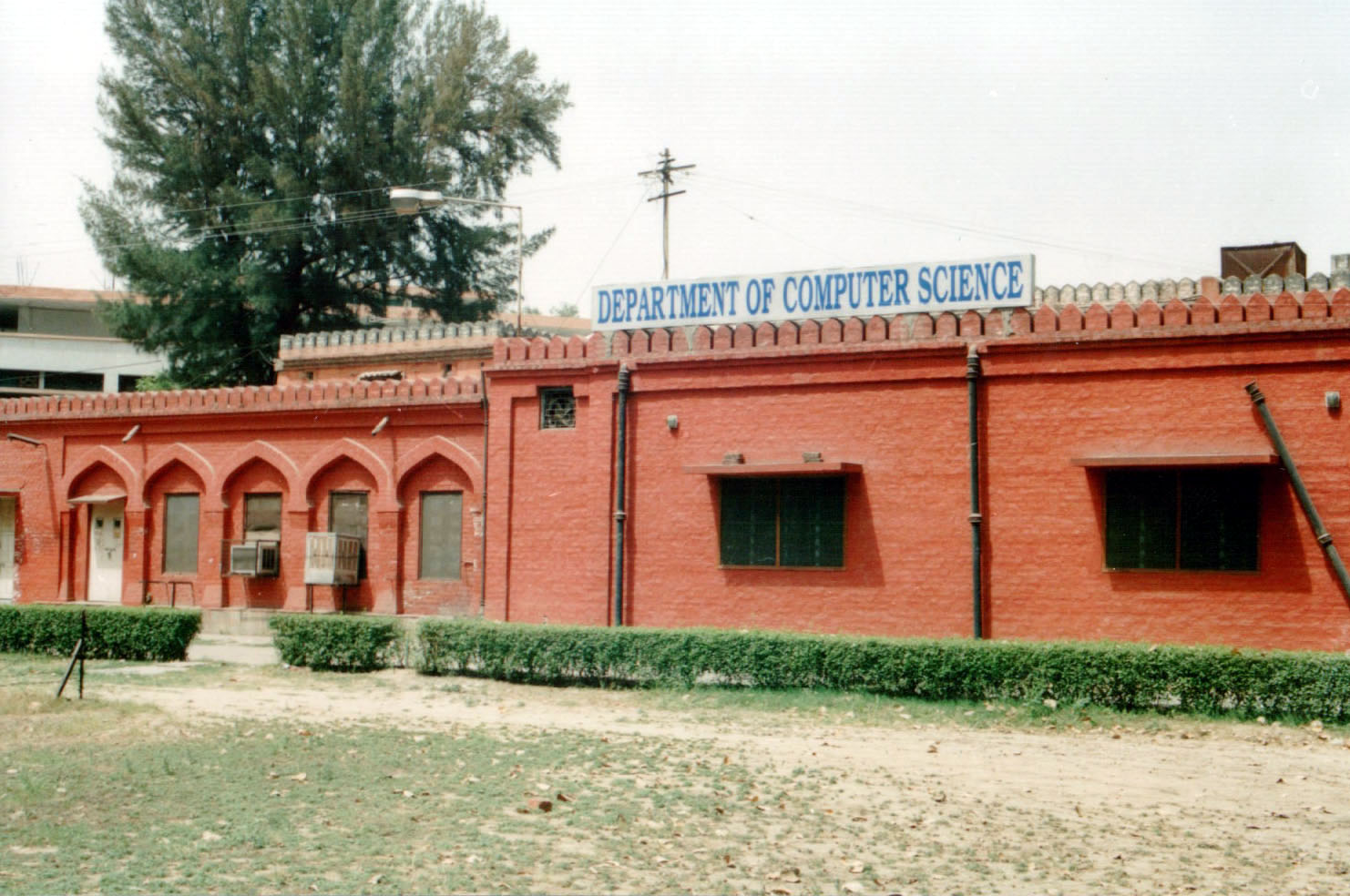
Syed Hamid put his best to bring back the past glory of his Alma Mater. The monthly magazine, Tahzeebul Akhlaq, started by Sir Syed Ahmad Khan was restarted again during his tenure. He started Department of Computer Science, Department of Modern Indian Language, and Department of Chemical Engineering. Administrative Block (Popularly known as Registrar Office) was completed during his tenure and Vice-Chancellor’s office which was located next to Victoria Gate (present Provost’s Office of S.S. Hall South) was moved to Administrative Block. For better management Sir Syed Hall was divided into 2 Halls of residence, Sir Syed Hall (North) & Sir Syed Hall (South). A 500 students Hall of residence, Allama Iqbal Hall, 200 women hostel (TW Hostel) in Abdullah Hall, New Guest House, 150 Bed Hospital building in J.N. Medical College & Hospital, Commerce & Law faculty buildings were completed during his tenure. He put a lot of emphasis on Coaching & Guidance Cell of University to develop competitive skills among the students for Indian Civil Services and other competitive exams for different prestigious institutions. His tenure as AMU V-C was marked by very tough, painful decisions, and an unwavering will to stem the rot. His administrative skills as a seasoned bureaucrat came in handy. His seniority in the IAS fraternity (he had only recently retired from service) ensured the respect of Aligarh district magistrate and superintendent of police; his academic record got him the respect of teaching community. That left students to concentrate on their study and stay away from mischief. He would listen politely to student leaders, but sent the message that they better concentrated on their careers. The tenure as V-C was a mixed experience: he succeeded in crushing anarchy, driving ruffians out of the campus, restoring the dignity of Sir Syed’s university, regularizing academic activity. At the age of 65 years, he handed over the rein of AMU to his deputy, Mr. K.M. Bahauddin and moved back to Delhi.

Even after the retirement, his passion for social reforms among Indian muslims did not faded. In 1992, founder of Hamdard Dawakhana and Jamia Hamdard, Hakim Abdul Hameed appointed him Honorary Secretary of Hamdard Education Society. This was a beginning of new phase of Syed Hamid’s life. He started Hamdard Study Circle, a premier coaching and guidance cell for Indian Civil Service competitions for Indian Muslims and other minorities. He also started Hamdard Public School in Delhi. To promote educational awareness among Indian Muslims, Syed Hamid started “All India Taalimi Karwwan in 1995. Syed Hamid with other Muslim intellectuals visited different parts of the country, specially in areas of significant Muslim population and made passionate appeal to Muslims to focus on education for the development of community and nation building. A complete repot of “All India Taalimi Karwaan” have been compiled by AMU PRO Dr. Rahat Abrar and have been published by UP Rabita Committee.

Syed Hamid is one of many “talents” spotted by Hakeem Abdul Hameed to nurture his dream of establishing a University. It was due to Syed Hamid’s untiring efforts and purposefulness that U.G.C. agreed to confer “deemed to be University” status on Jamia Hamdard. In June 2000, the Hamdard Educational Society organized a national seminar on Information Technology Revolution and Educationally Backward Minorities. He also served as a Member of the Jury to decide the prestigious Jawaharlal Nehru Award for International Understanding. He edits the fortnightly magazine “Nation and the World”. He writes regular columns in Urdu newspapers on issues concerning minority education. Recently, he has been nominated as Member of the Steering Committee on the Empowerment of SCs, OBCs and Minorities constituted by the Planning Commission for formulation of Tenth Five-Year Plan.

After the death of Hakeem Abdul Hameed, Syed Hamid have been elected as Chancellor of Jamia Hamdard. Even at the age of more than 87 years, Syed Hamid is still working for the upliftment and betterment of Indian Muslims and other minorities.

Saturday, July 21, 2007

Mohammad Hamid Ansari


Mohammad Hamid Ansari

Born: April 1, 1937 in Kolkata
Education: St Edwards High School in Shimla
St. Xavier College, Kolkata
S.T. High School (Minto Circle), AMU Aligarh
M.A. (Political Science) in 1959 from AMU Aligarh
Lecturer: Department of Political Science, AMU Aligarh -1959-61
Joined Indian Foreign Service in 1961 (4th Rank)

Chairman: National Commission for Minorities: March 2006 till date
Vice-Chancellor: Aligarh Muslim University from 28th May 2000 to 30th March 2002.
Chief of Protocol Officer Government of India (1980-85),
Ambassador: United Arab Emirates (UAE) 1976-80
Afghanistan, Iran, Saudi Arabia and Australia
Permanent Representative to the United Nations
Visiting Professor: The Centre for West Asian and African Studies,
Jawaharlal Nehru University
The Academy for Third World Studies, Jamia Millia Islamia
Chairman: The Advisory Committee for Oil Diplomacy of the Ministry of
Petroleum and Natural Gas
Co-Chairman: The India-UK Round Table
Member: The National Security Advisory Board
Trustee: The Bapu Sadbhavana and Shiksha Trust
Padma Shiri: 1984

Vice President of India - August 10, 2007 - Till date

Mohammed Hamid Ansari was born on April 1, 1937 in Indian city of Kolkata. His family originally belongs to Ghazipur (UP) but his father was staying in Kolkata. He is the grand-nephew of Dr. Mukhtar Ahmad Ansari, who was President of the Indian National Congress in 1927 (Madras Session) and founding member of Jamia Millia Islamia. After completing his primary education from St Edwards High School in Shimla, he joined St. Xavier College, Kolkata and later joined Aligarh Muslim University for higher education. He was a part of AMU cricket team during his student life and was wicket-keeper in the cricket team. After completing his education he joined teaching at AMU Aligarh and later qualified for UPSC and joined Indian Foreign Service (IFS) in 1961.

In his career as seasoned diplomat he served as ambassador to United Arab Emirates (UAE) from 1976 to 1980. He also served as Chief of Protocol Government of India from 1980 to 1985. He had also served as an ambassador to Afghanistan, Iran and Saudi Arabia. He had also served as High Commissioner to Australia. He had also served as Convener and later Chairman of The Advisory Committee for Oil Diplomacy of the Ministry of Petroleum and Natural Gas. He was a Permanent Representative to the United Nations. After retirement from Indian Foreign Services, he joined as a visiting Professor at the Centre for West Asian and African Studies, Jawaharlal Nehru University and the Academy for Third World Studies, Jamia Millia Islamia, New Delhi.

In May 2002, even with a lot of odds due to his age of 63 years he was appointed as Vice-Chancellor of his alma mater, Aligarh Muslim University. He served as AMU Vice-Chancellor from 28th May 2000 to 30th March, 2002. The only special thing about his term at AMU was 53rd Annual Convocation of 2001 which was held on 26th February, 2002 in Athletic Ground in AMU campus. The convocation address was given by former Prime Minister of India, Mr. I.K. Gujral. The annual convocation was held after a gap of 15 years. The 52nd annual convocation was held in 1986 and the convocation address was given by Giani Zail Singh, the then President of India. Here is the annual report presented by Mr. Mohammad Ansari at the historical 53rd annual convocation of AMU on 26th February, 2002;

Today is indeed a joyous occasion for us in this University where an Annual Convocation, instead of being an academic necessity, had become something of a rarity. For this reason alone, the happening would be noteworthy; what makes it doubly pleasant is the presence in our midst of Shri Inder Kumar Gujral as the Chief Guest. Gujral Saheb needs no introduction to audiences, national or international. His continued involvement in public affairs, and his position as a senior statesman, is an asset to the Indian polity. We in the Aligarh Muslim University also remember him for the pivotal role which he played many years ago in heading the Committee appointed by the Government of India for the Development of Urdu Language and Literature.

In a country like ours, where there are more than 200 Universities, a place of eminence is hard to attain and even harder to sustain. The Aligarh Muslim University is amongst the older Universities of the country having been established in 1920. We are in that privileged group of institutions of higher learning which find a mention in the seventh schedule of the Constitution of India. The University today has 89 Departments of Studies spread over 12 faculties namely Agriculture, Arts, Commerce, Engineering Tech., Law, Life Sciences, Management Studies, Medicine,
Science, Social Sciences, Theology and Unani Medicine. We have in the current academic year a little over 19000 students on our rolls including 6356 girl students. The founding fathers of this institution established it as a Residential University and the great majority of our students, therefore, reside in 15 Halls of Residence which have between them a total of 64 hostels. Besides this 5000 students are members of the non-resident student centre.

You are aware, Ladies and Gentlemen, that this University is the embodiment of a vision, a mission, and a movement. It was the expectation of Syed Ahmad Khan that the students of this institution “shall go forth throughout the length and breadth of the land to preach the gospel of free enquiry, of large hearted toleration and of pure morality”. Our alumni have certainly traveled to the four corners of the globe and very many of them have brought laurels to themselves and glory to their alma mater. This, however, does not lull us into a sense of complacency since we are aware that the other elements of the Motto of the College spelt out by Syed Ahmad Khan on January 8, 1877 remain but partially achieved and have shown a declining level of attainment. The malaise was diagnosed by a distinguished senior teacher of this University sometime back and is worth sharing with this audience:
A University is an institution of higher learning and its primary focus should be on matters academic. The derailment of yesteryears in our academic schedules and procedures has now been set right. The open lines of communication between the students, the teachers and the University administration enabled us in September 2000 to avert an unpleasant happening. In the past two academic sessions the curricula studies have been revised and updated. Attendance requirements have been strictly enforced and examination and admission schedules fully adhered to. As a result the academic performance of our students has registered some improvement. The young men and women who are receiving their degrees today would, therefore, step with greater confidence into the world outside.

A number of academic challenges confront us. The entire system of higher education in the country is confronted with the requirement of adjusting itself to the imperatives of change. The era of uncharted expansion is certainly over. In terms of its capacity the University is bursting at the seams. Its intake of students cannot be enhanced without major new infrastructural investments in faculty buildings, laboratories, library facilities and hostel space. Some funding for this from the Government would certainly be forthcoming; but would it be at a level and at a pace which would meet our requirement? The University, therefore, has to think about new ways of resource mobilization. The emerging policy framework of the UGC suggests performance budgeting, optimum utilization of the infrastructure, and a reduction of expenditure on salaries. Each one of these would entail an exercise in meaningful restructuring.

Another imperative is that of competition, quality performance and excellence. The University faculty has to develop and implement an enforceable framework of academic audit. The University needs, in particular, to enhance its research output in thrust areas. It has to ensure that the curricula of studies is constantly reviewed in order to keep up with the advancements in knowledge to ensure that our students are not deprived of its benefits.

The All India character of the University and the specific responsibility entrusted to it under Section 5(2)(c) under AMU Amendment Act imposes on us responsibilities which have been of late inadequately discharged. With this in view, a Committee of prominent public figures headed by our distinguished Pro Chancellor, Dr. Mumtaz Ahmed Khan was requested in October 2001 to review the admission policies of the University. Its report has now been finalized and will be submitted to the concerned University bodies for their consideration.

The AMU’s professional courses in Medicine, Engineering, Unani Tib, Management and Dentistry continue to attract good talent and result in stiff competition in entrance examinations. Our earlier decisions relating to the enhancement of intake in some of these professional courses resulted in difficulties with the statutory regulatory agencies. All of these have now been resolved; the sole exception is Dentistry where, too, good tidings are in the offing. The experience of unauthorised increases in the levels of intake does, however, require to be digested.

In response to a felt need a Foundation Course on Syed Ahmad Khan’s teaching and on the Aligarh Movement was introduced this year and has been widely welcomed. The University Grants Commission has to be thanked for approving the establishment of two new Centres, one on Nehru Studies and the other on Women’s Studies; both have started functioning. The UGC has also approved the establishment in the AMU of a nodal centre for Hiking and Mountaineering.

In the area of research the 10 year of DSA programmes in Geology, Mathematics, Urdu, Physics and History were extended. We have the ability of meaningful contribution to the national research effort in areas of biotechnology and environmental sciences and it will be the University’s endeavour to develop our research capabilities in these fields.

Despite having made a very early start in the area of computers, adequate infrastructure was not created in the University. Funds now available permit us to develop a campus network which would make internet facilities available in the first instance to the Faculties of Science, Life Sciences and Engineering and, in the second phase to the rest of the University. The University is also part of the UGC’s scheme of having a network linking all Indian Universities. Besides this the computerization of accounting, admissions and examinations has been completed and these together have considerably enhanced the quality of service in each of these areas.

The Maulana Azad Library, with its collection of over ten lakhs of books continues to be intensively utilized by the students at all hours of day and night. A programme to computerize the Library has been initiated and is expected to be completed soon. The Oriental Section of the Library, comparable in quality and quantity to the Khuda Bakhsh and Raza Libraries, has a priceless collection of over 14000 manuscripts including many pieces of exquisite calligraphy and of miniature paintings which were described by Gandhiji as an eternal feast for the eyes. The University has recently obtained expert advice on ways of developing the Manuscript Section in order to enhance its utility for scholars and researchers.

Aligarh’s old tradition of excellence in extracurricular activities in the areas of sports, performing arts, music, painting and debating has been revived through focused inputs. As a result the University achieved number two ranking in the All India Inter-Varsity Tennis Tournament in 2001 and, for the first time in its history, won the All India North-Zone Cricket Tournament in the current year. Students of the University excelled and won prizes in national competitions in shooting and roller skating. The General Education Centre’s Mass Communication team was adjudged as the overall champion for presenting the best film. In the Youth Festival this year our boys and girls collectively bagged 16 prizes and thus set an all time record.

The founding fathers of this institution had the vision to acquire for the University sufficient space for future expansion. The need of the hour, therefore, is to develop the campus in a planned and systematic manner. With this objective in view, a Master Plan Committee headed by a distinguished alumni was appointed last year; it is expected to finish the first phase of its work in the next few weeks. A number of development works of IX Plan period including new building for the Faculties of Law and Commerce and for the Department of Wild Life are nearing completion. A Women’s Hostel for postgraduate is under construction and extension works have been carried out in different sections of Faculty of Engineering.

The maintenance of and care of old buildings is a matter of particular importance for an institution which has been in existence for over a century. Last year the UGC gave us a special grant of Rs. 1 crore which was put to produce and many of the historic buildings of the University benefited from it. The Executive Council has recently taken a decision to have all the buildings in the Sir Syed Court, as also the Victoria Gate, declared as Heritage Sites and to have them registered with the Indian National Trust for Art and Cultural Heritage (INTACH). This would facilitate the maintenance of their historic character.

It gives me great pleasure to say that we are conferring today honorary degrees on three outstanding personalities in the fields of performing arts, literature and physical sciences. It was our ardent wish to have included in this distinguished list the name of an eminent jurist whose services to the cause of civil liberties and human rights are widely known within the country and abroad and to whom this University in particular owes a debt of gratitude. This wish remains unrealized today on account of a technicality and on extraneous considerations; it does not in any manner lessen the respect and affection for the individual.

Overall, Ladies and Gentlemen, the AMU is in good shape and is feeling rejuvenated. The University today needs to complete, in the words of a distinguished alumni, Syed Ahmad Khan’s unfinished agenda of fostering liberal and modernist ideas. It must respond to the winds of change just as Syed Ahmad has done. It must equip its students, and in some measure the Muslims of India to participate in, and respond meaningfully to, the imperatives of the new and vibrant India that is emerging before our eyes:

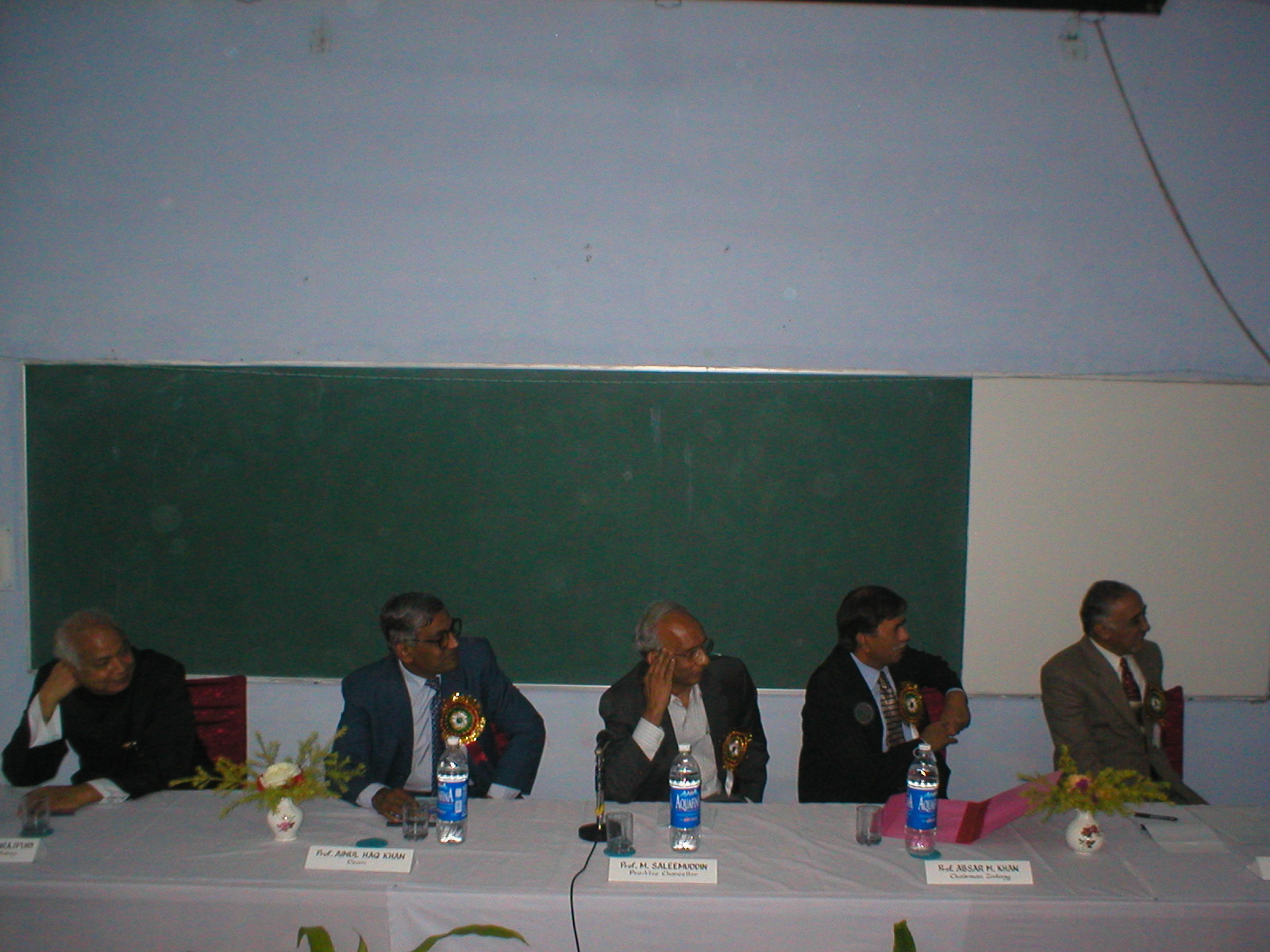
On 30th March after reaching to age of 65 years (as he was born on 1st April 1937), he handed over the charge of AMU Vice-Chancellorship to the Pro-Vice-Chancellor, Prof. Saleemuddin Siddiqui and moved back to Delhi to live a retired life. Even in his retired life, he was very active in academics and was serving as Visiting Professor to JNU and Jamia Millia Islamia in New Delhi and was a seasoned write to different news papers and print media on different social and political issues. Mr. Ansari wrote trenchantly on the Palestinian issue and took positions inconvenient to the Indian official line on Iraq and Iran. In a Leader Page article, “Alternative approaches to West Asian crises” (The Hindu, May 5, 2006), he brought out the need for simultaneous progress on Palestine, Iraq and Iran. In an earlier article, “Et EU, India,” (Outlook, October 10, 2005), he questioned India’s vote in the International Atomic Energy Agency on Iran’s nuclear programme. He said that though the Indian Government claimed to have acted on “its own judgment,” this was not borne out by facts. He also edited Iran Today: Twenty Years after the Islamic Revolution (Rupa, New Delhi, 2005) and has written a number of academic papers and newspaper articles on West Asian politics.

Mr. Ansari was appointed to the 5th Statutory National Commission for Minorities (NCM) in March 2006. Before that he was co-chairman of the India-U.K. Round Table, a member of the National Security Advisory Board and convener (and later chairman) of the Petroleum Ministry’s advisory committee on Oil Diplomacy for Energy Security. He was chairman of the working group on “Confidence building measures across segments of society in the State,” established by the Second Round Table Conference of the Prime Minister on Jammu and Kashmir in 2006. The report of the working group was adopted by the Third Round Table in April 2007. Among other things, the report advocates recognizing the right of Kashmiri Pandits to return to “places of their original residence.” This right, it argued, should be recognized without any ambiguity and made a part of state policy.

Seasoned diplomat and academician Mohammed Hamid Ansari was on Friday, 20th July, 2007 unanimously chosen as the United Progressive Alliance-Left candidate for the post of Vice-President of India. Scholar-diplomat-writer and currently Chairman of the National Commission for Minorities, Mohammad Hamid Ansari, brings with him a wealth of experience, having handled an impressive range of assignments in a career spanning over 45 years.


Mohammad Hamid Ansari has handled an impressive range of assignments in a career spanning over 45 years. These positions include co-chairman of the India-U.K. Round Table, a member of the National Security Advisory Board and convener (and later chairman) of the Petroleum Ministry's advisory committee on Oil Diplomacy for Energy Security. He has a deep interest in West Asian affairs. He has written extensively on the subject, including in The Hindu , where his latest column appeared on July 11.

Mr. Ansari edited the book, Iran Today: Twenty Five Years After the Islamic Revolution.

Links are provided here to his articles and book reviews in The Hindu and Frontline.

Source : http://www.hinduonnet.com/nic/0059/index.htm

2007

• Where does the Palestinian cause stand? (20070711)
• Iraq: Game plan for the endgame? (20070629)
• Craft, credulity, and reason (20070528)
• The war of ideas: mindsets and options (20070501)
• Arab Summit seeks a way out in West Asia (20070405)
• Signatures on a napkin — lobbies and national interest (20070326)
• Continuing myopia in West Asia (20070312)

2006

• Israel, America, and the question of Palestine (20061220)
• The search for a solution in war-torn Iraq (20061025)
• Political and military scenario-building on Iran (20061005)
• The great American disconnect (20060923)
• The `war on terror' and West Asia circa 2007 (20060902)
• War and war crimes (20060808)
• Domestic imperatives in Iran's foreign policy (20060712)
• The perils of dissent in U.S. universities (20060613)
• Grand bargains and distress sales (20060605)
• The U.S. and the strategy for freedom (20060602)
• Alternative approaches to West Asian crises (20060501)
• Iraq, Iran, and a strategy of a thousand errors (20060410)
• Strategic interests and political lobbies (20060329)
• The OIC and India: signals of a re-think (20060130)

2005

• Of holocausts, past and future (20051230)
• The Makkah Declaration: rhetoric and reality (20051215)
• The doctrine of "national interest" (20051104)
• The un-stated major premise (20051020)
• The complex battlefields of Iraq (20051008)
• An old debate reopened (20050914)
• In the land of Hammurabi (20050826)
• The tussle for the Iranian Presidency (20050613)
• Junctions and roadblocks in Arab politics (20050505)
• The question of Arab unity and reform? (20050415)
• Iran: stirring the pot? (20050328)
• More sophistry? (20050305)
• The reopened Iraq debate (20050204)
• United States and the world (20050124)
• Elections in Iraq (20050118)

2004

• Iran at the crossroads (20041028)
• Will America heed the message? (20041004)
• Iran and the U.S. (20040823)
• The urge to modernise West Asia (20040618)
• The imperative of wisdom (20040513)
• Bush backs Sharon's scheme (20040416)
• Bremer, Brahimi and Babylonia (20040306)
• Iraq defies the script (20040128)

2003

• The U.S. in Iraq (20031029)
• A visitor with a past (20030815)

2002

• The U.S. and Muslim nations (20021203)

Frontline

• Glimpses of Iran (20070615)
• Dimensions of insecurity (20060505)
• Changing diplomacy (20051118)
• Understanding the Indian Muslims (20041119)
• Sovereignty and human rights (20030117)
• Thwarted dreams (19981023)

Sunday, June 24, 2007

Prof. Mukhtaruddin Ahmad `Arzoo


Prof. Mukhtaruddin Ahmad `Arzoo

Born: 14th November 1924 in Patna Bihar
Fathers Name: Maulana Zafaruddin Qadri Rizvi
(Resident of Azimabad (Patna) and a disciple of Maulana Ahmad

Raza Khan Bareilvi)

D.Phil. Oxford University : 1958

(Under the able guidance of Prof. Hamilton A.R. Gibb)
Ph.D. 1953 AMU-Aligarh

(Under the able guidance of Maulana Abdul Aziz Meman)
M.A. (Arabic)-1949 AMU Aligarh

Lecturer, Department of Arabic AMU Aligarh: 1953
Reader:Islamic studies and Deputy Director of Institute of Islamic Studies: 1958
Professor and Chairman in Department of Arabic: 1968
Dean, Faculty of Arts: 1975


Editor: Journal of Islamic Studies, MAJALLAT AL-MAJMA AL-ILMI AL-HINDI

Ghalib Number of Aligarh Magazine

Member Editorial Board: Ma’arif: Monthly Journal of Darul Musannefin Shibli Academy


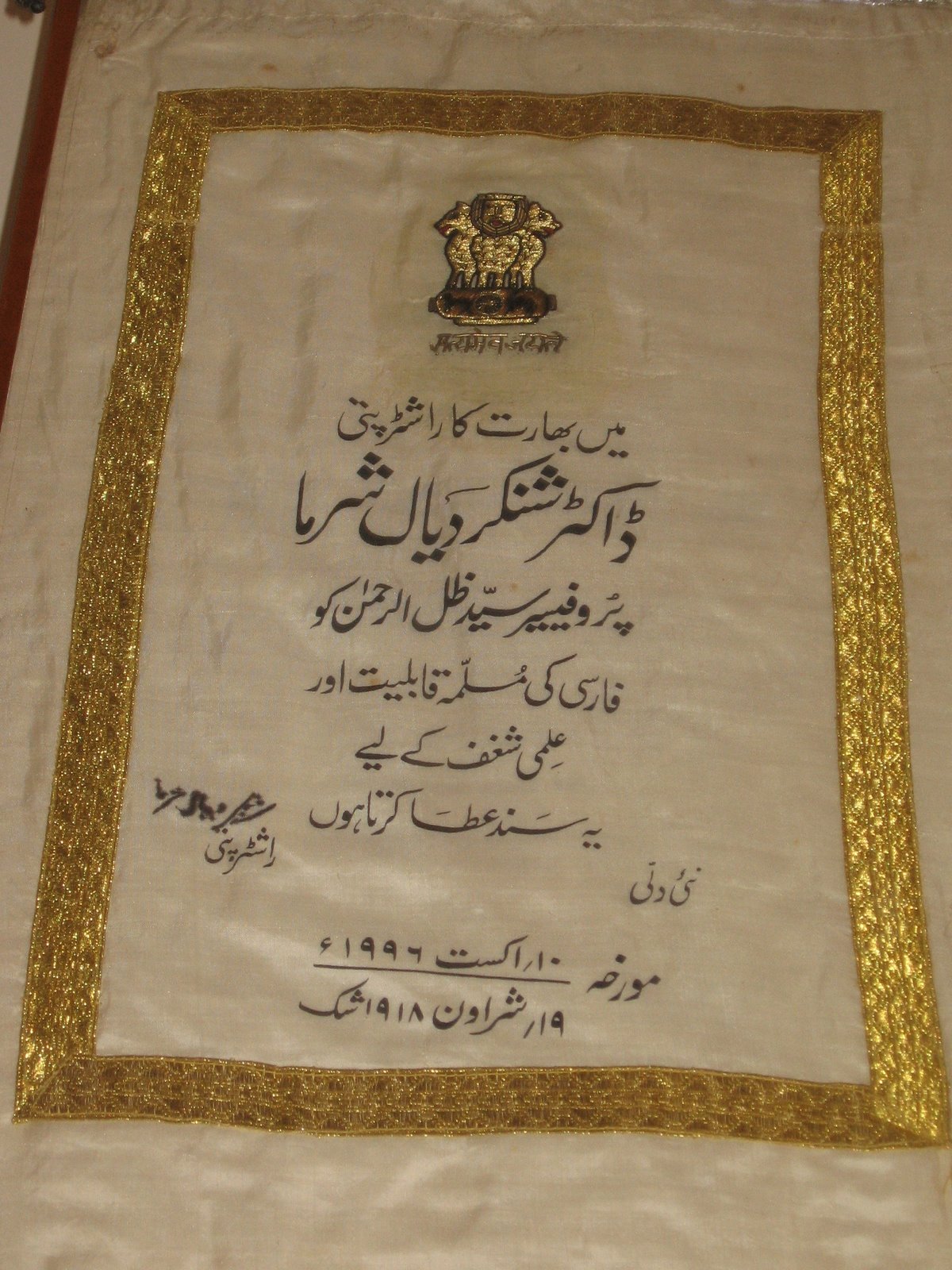
Awards : Certificate of Honor from President of India


Ghalib Award: 1983

Sir Syed Life Time Achievement Award:

Aligarh Alumni Association of New York US: 2007


Founder Vice-Chancellor of Maulana Mazharul Haq Arabic & Farsi University, Patna: 1988


Books: Karbal Katha, Khutoot-e-Akbar, Saire-Dehli, Tazkarah Azurdah, Tazkarah Gulshan-e- Hind, Tazkarah Shoara-e-Farrukhabad, Diwaan-e-Huzoor, Ahwaal-e-Ghalib and Naqad-e-Ghalib. Edited: Zakir Sahib Ke Khat, Vol. III.


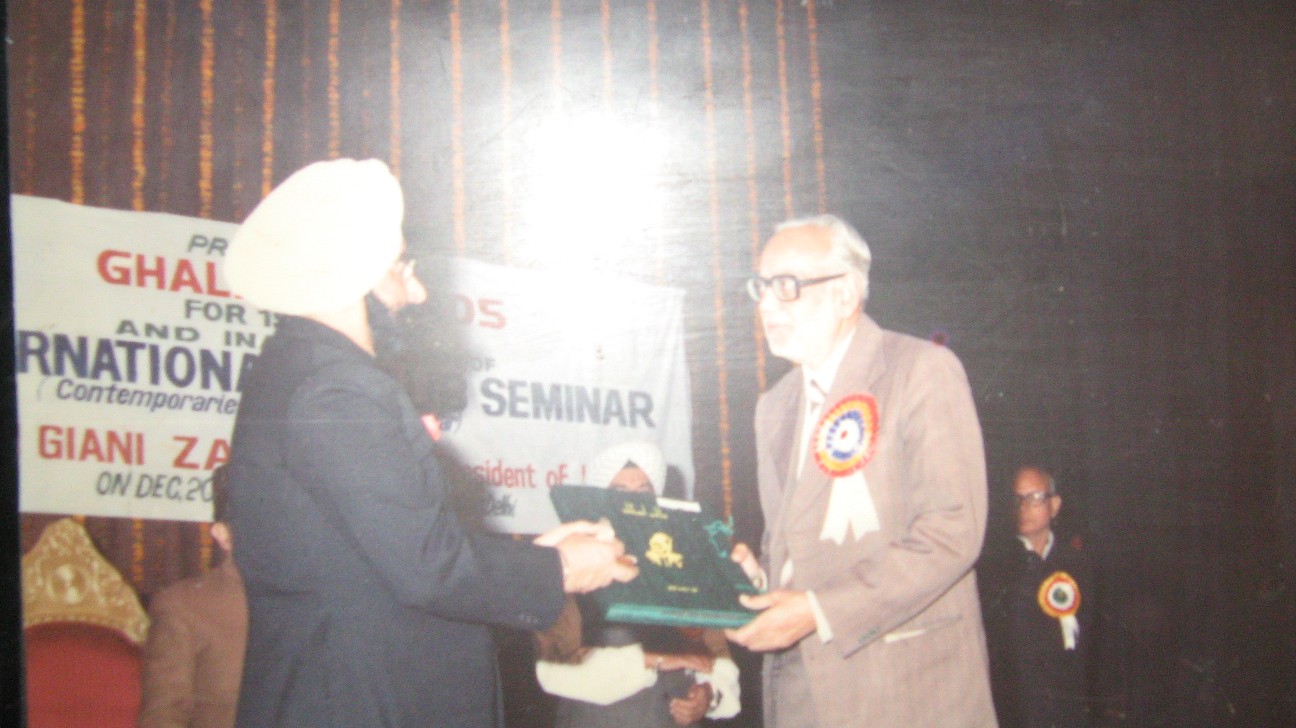
Prof. Mukhtaruddin Ahmad `Arzoo were born in a religious family of Maulana Zafaruddn Qadri Rizvi of Patna (also known as Azimabad in the past). He completed his primary education from Jamia Islamia Shamsul-Huda, Patna. He successfully completed the course of Maulvi and Alimiat from Madarsah examination board and secured distinction in Fazilat examination. He completed his matriculation from University of Patna in 1943 and joined Aligarh Muslim University for higher education. He completed M.A. in Arabic in 1949 and joined Ph.D. under the guidance of Maulana Abdul Aziz Memon, a word renowned Arabic scholar, Professor and Chairman Department of Arabic, AMU Aligarh and disciple of Deputy Nazir Ahmad. He became renowned after Editing the famous Ghalib Number of Aligarh Magazine.
After completing his Ph.D. he joined Department of Arabic as Lecturer in 1953. In the same year he received Rock Fuller Fellowship for research in Middle-East and England. He traveled to Germany, France, Egypt, Turkey, Syria, Lebanon and Iraq for educational purposes. He also stayed in Holland for couple of months and worked in Leiden University Library. He wrote the thesis under the guidance of Prof. Hamilton A.R. Gibb in Oxford University to receive his D.Phil.

In 1958, he became Reader in Islamic studies and Deputy Director of Institute of Islamic Studies at AMU Aligarh. He started journal of Islamic Studies and was its Editor for 12 years. In 1968 he became Professor and Chairman in Department of Arabic. He became Dean, faculty of Arts in 1975. He was Editor for MAJALLAT AL-MAJMA AL-ILMI AL-HINDI for number of years. For his contributions to Arabic and Farsi research work, he received Ghalib Award in 1983. After retirement he is staying in Aligarh and busy in his research. Well known critic and Urdu write Intizar Hussain said: “And how can I forget those two distinguished scholars, Dr Mukhtaruddin Aarzoo and Prof Asloob Ahmad Ansari, who after retirement have chosen to lead a secluded life focusing on research and study”.


On 10th April, 1998, Prof. Mukhtaruddin Ahmad Arzoo was appointed as Founding Vice-Chancellor of Maulana Mazharul Haq Arabic & Persian University in Patna.
He lives with his family in Aligarh.

=================================
Professor Mukhtar Uddin Ahmad “Arzoo”
Professor Ather H. Siddiqi

Former Chairman, Department of Zoology & Dean Faculty of Life Sciences

Aligarh
Muslim University
, Aligarh

Six years ago, the Aligarh Alumni Association, New York Tristate, instituted the annual ‘Sir Syed Day Lifetime Achievement Award for Excellence in Literature, Poetry, Arts or the Sciences’, which has been presented in previous years to some of the most distinguished names in South Asia in various fields. This year, the association chose Prof. Mukhtar Uddin Ahmad, former Professor of Arabic and Dean Faculty of Arts and one of the most renowned, revered and senior academicians at Aligarh Muslim University, Aligarh for this honor. To spare Prof. Mukhtar Uddin the stress and inconvenience of traveling to the USA to receive the award in person, the association was able to organize an event for the presentation of this award on the AMU campus through the hard work and courtesy of Dr. Wajid Ali Naqvi. This article is adapted from a speech given on this occasion by the author.

It is a matter of great pleasure and honor for the author to write about the extraordinary scholarly contributions of one of the most illustrious sons of Aligarh, Prof. Mukhtar Uddin Ahmad, whose name is known to every Aligarian for the last 60-65 years. Throughout its history, the Aligarh Muslim University has had the distinction of producing many scholars, intellectuals and academicians of high caliber but Prof. Mukhtar Uddin is one of the few in the league of giants who stands out from a galaxy of Aligarians as far as his educational, literary and intellectual contributions in the field of Arabic and Urdu are concerned. He is a member of many academies and has traveled far and wide in Middle Eastern as well as in European countries. He has been invited to many countries, like Egypt, Jordan, Syria and Pakistan and is a frequent visitor to Jordan for advising the government academy on research in Arabic Studies. In recognition of his outstanding contributions to Arabic and Urdu, he was awarded the President of India's Certificate of Honor in Arabic and the Ghalib Award by the Ghalib Institute in Delhi.

Professor Mukhtar Uddin Ahmad was born on 14th November 1924 in Patna, Bihar. His father, Maulana Zafaruddin Qadri Rizvi, a disciple of Maulana Ahmad Raza Khan of Bareilly, belonged to a distinguished family of scholars, had authored more than fifty books and was counted among the very learned people of Azimabad, as Patna was known in those days. Mukhtar Sahib is a seventh generation descendent of Sheikh Abdul Qadir Jeelani.

After having being tutored by his parents in Arabic, Persian and Urdu at home and finishing the Holy Quran at age six, he joined regular school and completed his primary education from Jamia Islamia Shamsul-Huda

Patna, successfully completing the course of Maulvi and Alimiat from Madarsah examination board. He stood first among all students in Bihar and Orissa in Fazil examination and was awarded the Sir Fakhruddin gold medal. He secured the same distinction two years later in the Fazil Hadith examination and was again awarded a gold medal, presented by Sir Abdul Aziz, State Minister of Education. During the six years that he spent at Jamia Shamsul Huda, he had an opportunity of interacting with and benefiting from the knowledge of a number of learned scholars of different schools of thoughts and traditions. Maulana Zafar Qadri, his father, thought highly of the profession of teaching in religious schools and naturally wanted his son to follow in his foot steps. He had firmly decided to send him to Jamia Azhar in Egypt and had initiated correspondence with Mustafa Muraghi, the Sheikh ul Azhar; however the outbreak of World War II derailed his plans for the further education of his son. Muktar Sahib, therefore, had to turn his attention toward English education, passed his matriculation examination from the University of Patna in 1942 and joined Aligarh Muslim University in 1943. After completing his B.A., he wanted to take admission in M.A. but was equally interested both in Urdu and Arabic and could not make up his mind about which subject to choose. As he has related in one of his articles, he kept a filled out application for admission to M.A Urdu program in one pocket and for Arabic in the other pocket of his Sherwani. In this state of indecision, he went to meet Maulana Abdul Memon of the Department of Arabic one day and described his dilemma to him. Maulana Memon asked him to show the two forms, tore up the application form for admission to post graduate program in Urdu and threw it in the waste paper basket. He then signed the application for admission to M.A in Arabic and returned it to Mukhtar Sahib and stated with a hearty laugh that a decision had been made. Mukhtar Sahib completed M.A. in Arabic in 1949 and stood first in order of merit.

Following his graduation, there were job opportunities for him with the Archaeology Department of the Government of India and at Calcutta University, however Dr. Zakir Husain, the new vice-chancellor of AMU who was well aware of Mukhtar Sahib's capabilities through his articles and the famous 'Ghalib Number' of the Aligarh Magazine, wanted him to stay at Aligarh and arranged a part-time job for him at Lytton library. He worked from morning to afternoon at the library and devoted the rest of his time to his research finishing his thesis work for a Ph.D. degree in Arabic, under the able guidance of Maulana Abdul Aziz Memon, a world-renowned Arabic scholar, Professor and Chairman Department of Arabic at AMU Aligarh and a disciple of Deputy Nazir Ahmad, in less than two years. Dr Cranko, the renowned German scholar, Chairman of

Arabic at Cambridge University, who was the assigned foreign examiner/expert for Mukhtar Sahib’s thesis was ill and hospitalized at the time. He initially refused to take up the responsibility of serving as the examiner. However, when he came to know of the topic of Mukhtar Sahib’s research, which was in a field of his own interest, in spite of his infirmity he accepted to evaluate his thesis. He was greatly impressed by the high standard and quality of Mukhtar Sahib’s Ph.D. thesis and even recommended its publication by the Wiesbaden Academy in Germany. Breaking tradition, he also wrote a personal letter directly to Mukhtar Sahib profusely praising his excellent research work and encouraging him to continue his research activities.

After completing his Ph.D., he joined the Department of Arabic as Lecturer in 1953 and in the same year received a Rockefeller Fellowship which required him to work and study in the United States of America. However, he was more interested in going to Europe and therefore wrote a letter to the Director of the foundation, along with a copy of his research proposal, pleading that since the universities in the United States did neither have the resources in terms of documents and manuscripts nor faculties of the same caliber as in Europe, he be allowed to carry out his research in England or another European country. The foundation forwarded his request to Professor Gibb of Oxford and Professor Smith of McGill University in Canada, who liked his proposal and the foundation made arrangements for him to work with the internationally famous Professor Gibb on 'Social Criticism in Modern Arabic Literature'. At the end of his one year stay at Oxford, he was ready to return to Aligarh but Professor Gibb encouraged him to continue his research and intervening on his behalf, wrote letters to Dr. Zakir Husain, vice-chancellor and Professor Abdul Aleem, Chairman, Department of Arabic requesting an extension in Mukhtar Sahib's leave of absence, which was granted.

His stay in Europe and his contact with eminent scholars and teachers served as a strong stimulus to his research capabilities and interests. On the one hand he established contacts with top orientalists of premiere universities and research institutions of Europe and on the other spent a great deal of time at British Museum and other depositories of research material in England as well as visiting libraries in Holland, Scotland, Germany and France in order to collect material for his research before returning to Oxford. Just like his Ph.D. at AMU, he completed his degree at Oxford also in a record time of only fifteen months. Professor Gibb had left Oxford for Harvard University near the completion of Mukhtar Sahib's thesis research. Therefore, Professor Batesman served his thesis preceptor and Professor Arby of the Department of Arabic at Cambridge University was the external examiner.

He stayed in Holland for a few months and worked at the Leiden University Library where he discovered a very useful and rare manuscript on the poetry of a Syrian poet, Muslim Bin Mamhood Shari. Based on this find, he wrote an important critical analysis of Shari’s poetry.

Furthermore, during his stay in Europe, he discovered three rare and seemingly lost manuscripts in Urdu including 'Tazkira-e-Azurda' and 'Tazkira-e- Haideri'. However, his most remarkable contribution to Urdu was the discovery of the rare manuscript of 'Karbal Katha', considered to be the oldest book of North Indian prose and thought to have been lost to time, through his painstaking search and its subsequent publication in collaboration with his close friend, the late Malik Ram. Before his departure for Oxford, he had gone to meet Qazi Abdul Wadood who beseeched him to look for the manuscript of Fazli’s book by this name which Dr. Sprenger had taken back with him when he left Calcutta to go back to Germany, over hundred years ago, and thus render an invaluable service to Urdu literature. He was able to locate this manuscript in a library of a small German University town of Tubingen by sifting through thousands of manuscripts one by one.

The late Malik Ram was a respected expert on Ghalib and his many works included the authoritative ‘Zikr-e-Ghalib' and countless contributions on Arabic, Persian and Urdu literature. He shared with Mukhtar Sahib the love of research, Ghalibiat, a spirit of collaborative work and a sense of dedication towards completion of a project. Mukhtar Sahib's collaboration with him on the publication of 'Karbal Katha' brought them even closer. A compilation of the hundreds of letters that they exchanged was done by Ali Jawad Zaidi and Mukhtar Sahib himself wrote about Malik Ram endearingly in 'Naqoosh, Lahore Shaqsiat Number’. In this article Mukhtar Sahib describes his sense of utter disbelief and awe on learning during a visit to Malik Ram's house that except for his eldest daughter Usha, his other three children had Muslim names; Bushra, Aftab and Salman. Malik Sahib sensed Mukhtar Sahib's astonishment and explained to him the origin of these names. They had one daughter Usha and when the second was born, the parents were told by a friend that if the newborn was named Bushra in a spirit of utmost sincerity, the next child would be a boy. Malik Ram Sahib’s mother was puzzled on hearing the name Bushra and asked her son if this wasn't a Muslim name to which he retorted that she also had given him a Muslim name i.e. Malik. Equally struck with disbelief was King Saud of Saudia Arabia who visited Bushra's school during a state visit to India and when she, as the student chosen to welcome him did so in impeccable Arabic. His sense of bewilderment and pleasure was heightened when he learned that Bushra was a Hindu. In 1987, Malik Ram organized a committee named 'Majlis-e-Nazr-e-Mukhtar' comprising of a number of the most distinguished educators and scholars of India and compiled a book 'Nazre-Mukhtar' which appeared in 1988. This book included an exhaustive and through article titled "Zikr-e-Mukhtar' written by Malik Ram which discussed every aspect of Mukhtar Sahib's life including his birth and his family.

During the early period of his academic life, Mukhtar Sahib used to compose poetry also under the 'Takhallus' Arzoo which he later dropped and relinquished the pursuit of poetry, but he is still known by the name Mukhtar Uddin Arzoo Sahib in Aligarh. In his article, Malik Ram Sahib has included samples of Mukhtar Sahib's poetry.

Perhaps the reason that he didn't pursue this line of intellectual activity was that he wanted to be at least comparable in stature to Josh and Firaq and didn't want to be known as a mediocre poet.

Mukhtar Sahib is one of a select group of scholars, such as Dr. Nazir Ahmad, former Chairman, Department of Urdu, AMU, Dr. Abdul Sattar Siddiqi and Dr. Nisar Ahmad Farooqi whose primary field was not Urdu but who established a prestigious name for themselves in the field of Urdu research. During his student days, Mukhtar Sahib served as the Editor of the Ghalib number of the Aligarh Magazine, which was very well received and to this day is considered to be an important contribution in the field of ‘Ghalibiat’. Material published in the Ghalib number was later published as two books, 'Ahwal-e-Ghalib and ‘Naqd-e-Ghalib’ with addition of many other articles and revision of the old ones. Beside the discovery of Karbal Katha, already mentioned, and many other original Urdu manuscripts in various libraries of Europe and England, he is best known for his critical and logical analysis and appreciation of the great poetry of Ghalib. This has made him one of the outstanding international authorities on Ghalibiat.

Upon his return from abroad, Mukhtar Sahib became a Reader in the Department of Islamic studies and Director of the Institute of Islamic Studies in 1958. He became a Professor and Chairman, Department of Arabic in 1968, and Dean, Faculty of Arts in 1975. On 10th April 1998, Prof. Mukhtar Uddin Ahmad was appointed as the Founding Vice-Chancellor of Maulana Mazharul Haq Arabic & Persian University in Patna.

During the last sixty plus years, Prof. Mukhtar Uddin has written innumerable books, research papers and made other scholarly contributions. Many academicians claim to write a few books and some odd number of research papers in their lifetime. In the case of Professor Mukhtar Uddin Sahib’s research output, a mere listing and indexing of all his contributions, including articles, edited books and original research papers, forms a book by itself, called ‘Mukhtar Nama’ compiled by Dr. Ata Khursheed and Meher Illahi Nadeem and published in 2002. It is quite amazing to see how he could have accomplished so much and how he still remains engaged in doing research and in pursuit of scholarly activities at his age. Among his major works/books in Urdu are: Karbal Katha, Khutoot-e-Akbar Allahabadi, Sair-e-Dehli, Tazkarah Azurdah, Tazkarah Gulshan-e-Hind Haideri, Tazkarah Shoara-e-Farrukhabad, Diwaan-e-Huzoor Azeemabadi, Ahwaal-e-Ghalib and Naqad-e-Ghalib. Edited: Zakir Sahib Ke Khat, Vol. III. This listing of his contributions is illustrative and not exhaustive by any means. Besides having published a large number of papers, he edited the Journal of Islamic Studies ‘MAJALLAT AL-MAJMA AL-ILMI AL-HINDI. He was a member of the Editorial Board: Ma'arif: Monthly Journal of Darul Musannefin, Shibli Academy

During his lifetime Mukhtar Sahib has received many honors and awards. He received the Meer Award from

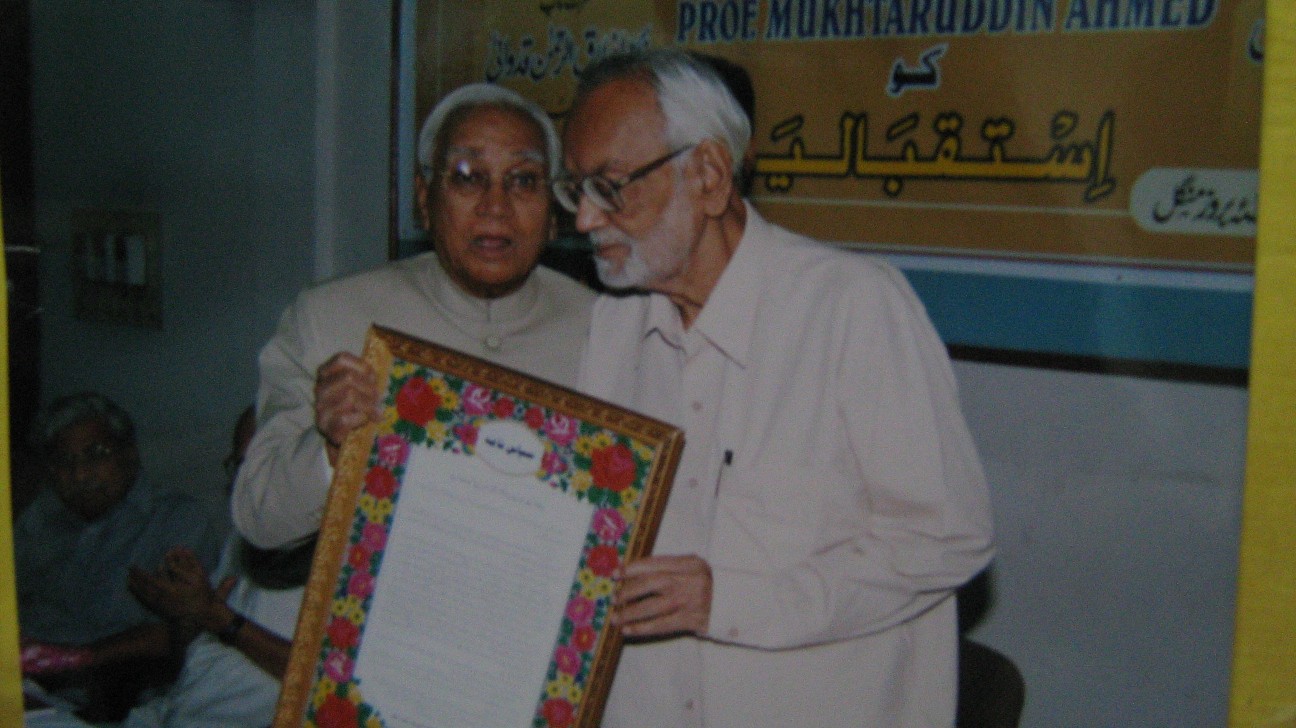
Meer Academy, Lucknow in 1965, the Certificate of Honor from President of India, Ghalib Award in 1983, and was presented a commemorative volume ‘Nazr-e-Mukhtar edited by Dr Malik Ram in recognition of his literary and educational services on his 64th birth anniversary in 1988, as already referred to above, and was awarded the Imam Ahmad Raza Award in 2001. In 2005, the Ghalib Institute organized a function honoring him for his contributions to the literary world. His selection for receiving this year’s ‘Sir Syed Day Life Time Achievement Award’ from the Aligarh Alumni Association of New York Tristate is another befitting tribute to him.

Mukhtar Sahib is a great letter writer. He receives a lot of correspondence and promptly replies all letters as a matter of duty. All letters are earmarked on receipt and kept chronologically in separate large envelopes with dates when the replies were sent noted. The letters cover a wide range, from being personal, to containing questions about literary matters. His accumulated correspondence with many literary experts in Arabic and Urdu of the subcontinent, the Middle East and the rest of the World could constitute several books. He also writes his diary regularly. In fact, it is really impossible to take account of the prodigious amount of work that he has done in any detail.

I have known Prof. Mukhtar Uddin for the last 60 years but he did not know me. He is senior to me by seven years in age but only by four years in terms of Aligarian seniority; he came to Aligarh in 1943 and I joined this institution in 1947. He resided in Sir Syed Hall and I in the Viqarul Mulk Hall. He belonged to the Faculty of Arts and I belonged to the Science Faculty. As a matter of fact, we were poles apart in terms of Aligarh topography. I lived in the north and he in the south of the campus. However, even as a student, he had shown great spark of academic and intellectual seriousness of purpose and single-minded devotion to his academic pursuits. As already mentioned, the editorship of Aligarh Magazine’s Ghalib Number was one of his earliest academic accomplishments while he was still a graduate student. I came to know of him through that magazine, which has remained one of the best documents published under the banner of the university as far as its editorship as well as its literary contents are concerned. It remains to this day a monumental work of literature, especially on the great poet, Ghalib. Right from the beginning, one could see that with the passage of time Prof. Mukhtar Uddin was destined to reach great heights of academic excellence in the areas of his chosen research. Although he married very young at the age of 21, when he was a student of Intermediate, undeterred by opposition from various relatives who feared that he would not be able to concentrate seriously on his education, his dedication to scholarship continued unabated.

I had seen Prof. Mukhtar Uddin on the campus and had heard about him and his academic achievements and the respect in which he was held as one of the best intellectuals and able professors of the AMU. I also knew that his personal library held more than eighteen thousand books, journals, original manuscripts and hundreds of

letters written by famous men of literature. My love for Urdu books was more than enough reason to visit his library but there was no occasion to meet him. After my retirement, I was free to pursue my love of Urdu and wanted to meet Prof. Mukhtar Uddin. Ibne Sina academy provided a few but rare opportunities of meeting famous people at some of its regular meetings. Still I was in awe of Prof. Mukhtar Uddin and did not know how to pay a visit to his house and meet this great man at a personal level.

By this time, I had published my autobiography, ‘Main Kiya Meri Hayat Kiya.’ Prof. Mukhtar Uddin had also read it and thus he had become familiar with the name of an obscure novice dabbling in Urdu writing, who happened to be a science student and a teacher. I had heard that he had a very famous book - a dewan of Ghalib called Nuskha-e-Khawaja, edited and published by Prof. Syed Moeen Ur Rehman of the GC University of Lahore. I was very keen to see that book, and Taqreeb kuch tu behr-e-mulaqaat chahiye, I used this as a ruse to visit Prof. Mukhtar Uddin.

Meeting Prof. Mukhtar Uddin was a delightful experience for me. I found him to be very kind and courteous. He received me with great love and affection and willingly showed me the book I wanted to see and even lent it to me to take it home and see it at leisure. I was deeply moved by his generosity and his faith in me that I would take care of his precious and rare book, though it was our first meeting. This was the beginning of our relationship, which has developed into a very close association over the last 3-4 years. His good nature and will to help his students, fellow faculty members, and friends is rather remarkable. Once I suggested to Prof. Mukhtar Uddin to make a note of the books that he lends to people so easily and willingly. He replied. ‘Giving and lending books to people is my duty, to return them is the duty of the persons who borrow my books.’ I hope no body breaches his faith and confidence in human nature.

In the last few years of my association with Prof. Mukhtar Uddin, I have found him to be a man of great intellectual and academic virtues without any signs of arrogance pertaining to his immense intellectual achievements or his exalted place and standing in the academic and literary world of Arabic, Urdu and Persian literature. He is very soft-spoken, listens more than he talks and shows great interest in whatever one has to say and never imposes his will on anyone. When I talk of science and biology to him, he pays the utmost attention and would ask any question that comes to his mind. I have found him to be a very simple, benevolent and affectionate person with immense interest in his work and reading new books. He devotes most of his time, sometimes in excess of 12-16 hours a day to his reading and writing and if he lays his hands on some very interesting book, he may remain awake the whole night to finish it. Once he was staying with a friend who put him up in his guest room/library. Mukhtar Sahib found the library well stocked and when he saw a book that he hadn’t read, he picked it up and kept on reading till he heard a call from downstairs ‘Doctor Sahib Nashta

tayyar hai, tashreef lay aaiye’. He did not realize that he had continued reading all night and it was breakfast time. The book contained only 600 pages!!!

Though very soft spoken and a quiet person, he has a great sense of humor that comes out particularly in his Urdu essays, his diaries and travelogues which have been published from time to time in various Urdu periodicals in the sixties and seventies. Many anecdotes of his student days at Aligarh are included in such writings. His Urdu writing style is simple, unencumbered by verbosity or usage of difficult words and hardly a word seems to be redundant or unnecessary.

Mukhtar Sahib has been witness to an era of great turbulence and upheaval which saw the independence of the country as well as its partition. Throughout all the ups and down of political as well as other changes that altered the entire face of life at Aligarh compared to what it used to be when he joined the university as a young student in 1943, Mukhtar Sahib has steadfastedly remained loyal to Aligarh and has never entertained the idea of moving to greener pastures although he could have any lucrative job anywhere in the world just for asking and did indeed receive unsolicited offers of highly paid position at the University of Punjab, Pakistan, University of Wisconsin, Madison and Calcutta University. The changes that took place in the intellectual environment of the university particularly in the areas of literature and poetry due to the rise and fall of the Progressive Writer’s Movement in particular, the decline in the standards of education and in personal behaviors of students and faculty alike, deserve to be chronicled in the context of the life and times of a famous Aligarian like Mukhtar Sahib. Although he has written numerous articles from a first person perspective such as Mukhtar Uddin Arzoo - Khud Nawisht, Meray Bachpan Ka Azeemabad, Aligarh Kay Shub-o-Rooz, Yadoon Kay Chirag, Tulabai Aligarh Dayar-e Farang Main, Phool Khile Hain Gulshan Gulshan etc, there are not compiled in the form of a unified autobiographical compilation and published as a book. One sincerely hopes that he will write his autobiography in his inimitable style of subtle humor which will encapsulate the vast panorama of his eventful life against the backdrop of one of the most ‘PurAashaub’ era of our university.

Professor Ahmad’s life to date can be summed up in one line of a couplet of Allama Iqbal:

Narm dum-e-Guftagoo, Garm Dum-e-Justujoo

REFERENCES:

1. Nazr-e- Mukhtare, compiled by Malik Ram, Majlis-e-Nazr-e-Mukhtar, New Delhi (1988)

2. Mukhtar-Nama compiled by Atta Khursheed and Mehr Elahi Nadeem, Aligarh Heritage Publications, Aligarh (2002)

3. Professor Mukhtar Uddin Ahmad, Muhaqqiq aur Danishwar, compiled by Shahid Mahli, Ghalib Institute, New Delhi (2005)